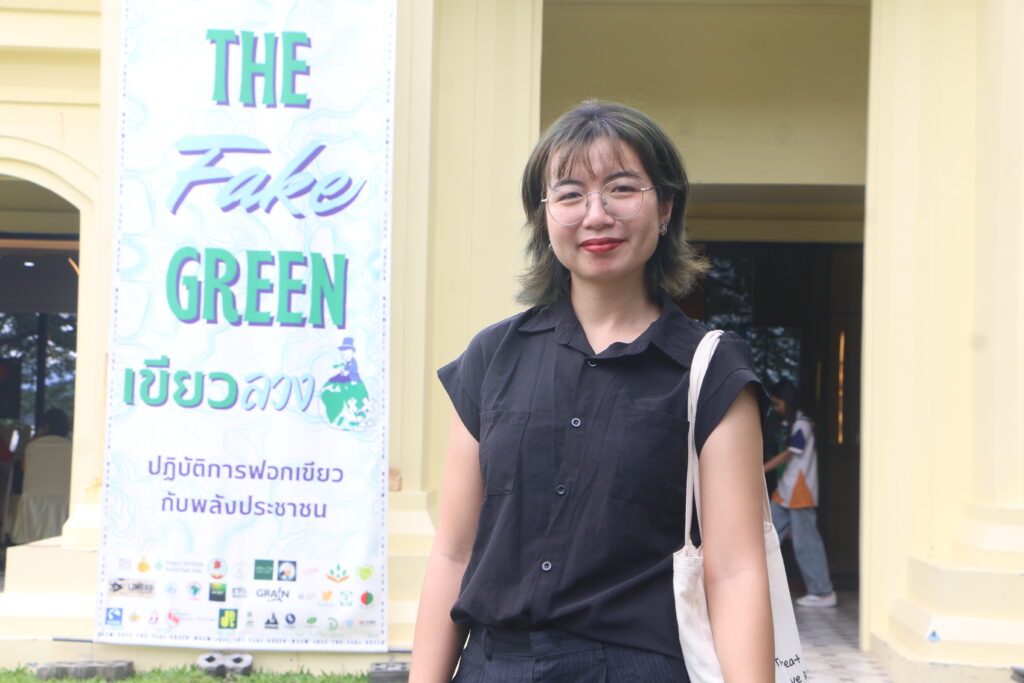
When Dear began studying law in Chiang Mai, she imagined the legal system as a clear path toward fairness. But as she moved deeper into her studies, and later into work with communities affected by environmental and human rights violations, she saw how unequal that path could be.
As a young Tai Lü Indigenous woman and law graduate of Chiang Mai University, Dear always understood that the law on paper and in practice can be worlds apart. Thailand’s 2014 coup, she says, played a defining role in that realization.
“The current Thai constitution was a result of the last coup. There are a lot of restrictions on Indigenous community rights because of this,” she explains. This pushed Dear toward a career grounded in the belief that all communities deserve equal access to justice.
Today, she works at a civil society organization focused on teaching communities about their rights and supporting them as they navigate environmental threats, extractive projects, and legal barriers to participation. She is also a graduate of the Mekong Legal Advocacy Institute (MLAI) training program and a member of the EarthRights Alumni Network.
“There are limitations on freedom of expression. When people get together, this action could be seen as a violation of national security,” she says. In response, she designs legal awareness trainings that equip people and communities with the tools to defend themselves. “My role is to provide training about what rights we have and how we can defend our rights.”
A Turning Point: Joining the Mekong Legal Advocacy Institute
In 2024, Dear joined the Mekong Legal Advocacy Institute (MLAI) program, an experience that she describes as transformative. Through the intensive, two-week-long program, participants gather at the Mitharsuu Center in Chiang Mai to learn about international, regional, and national legal frameworks for the protection of environmental and human rights. They also learn about corporate accountability, preparation of lawsuits, and the protection of defenders across the Mekong region.
“When I joined the MLAI training program, this opened up an opportunity to learn about environmental law, legal pathways, and how to submit a lawsuit,” she says. Through the program, she learned about different legal cases, allowing her to compare strategies and examine how political systems shape legal outcomes. “I learned about cases from many different countries. I made comparisons, analysed the advantages of cases, and worked on policy issues.”
Dear wasn’t just learning at MLAI – she was also contributing. Her extensive experience working with communities in Thailand allowed her to participate proactively in discussions on using the law to protect communities at risk of harm. “During the MLAI, I shared my experiences on how to work with the Administrative Court in Thailand, how to work with communities, and how to empower communities in the Thai political context,” she says.
Her participation in MLAI helped her to deeply reconnect with the reasons why she began studying law in the first place: her strong belief that Indigenous communities deserve respect, autonomy and the right to chart their own future. “It’s really unfair that they don’t have a space to decide their own destiny, what they want to be, and what is best for them,” she says. “Everyone should have equality in terms of deciding the policies and laws that impact them.”
Building a Regional Movement Through the Alumni Network
Following her graduation from the MLAI, Dear joined the EarthRights Alumni Network. Through this network of graduates from all EarthRights training programs around the world, Dear continued connecting with other like-minded professionals in an empowering and collaborative environment.
The EarthRights Alumni Network provides graduates with further support to achieve their campaign and advocacy goals in defense of human rights and the environment. It also provides graduates with continued learning opportunities and specialized sessions on topics such as combatting criminalization and facing cybersecurity threats.
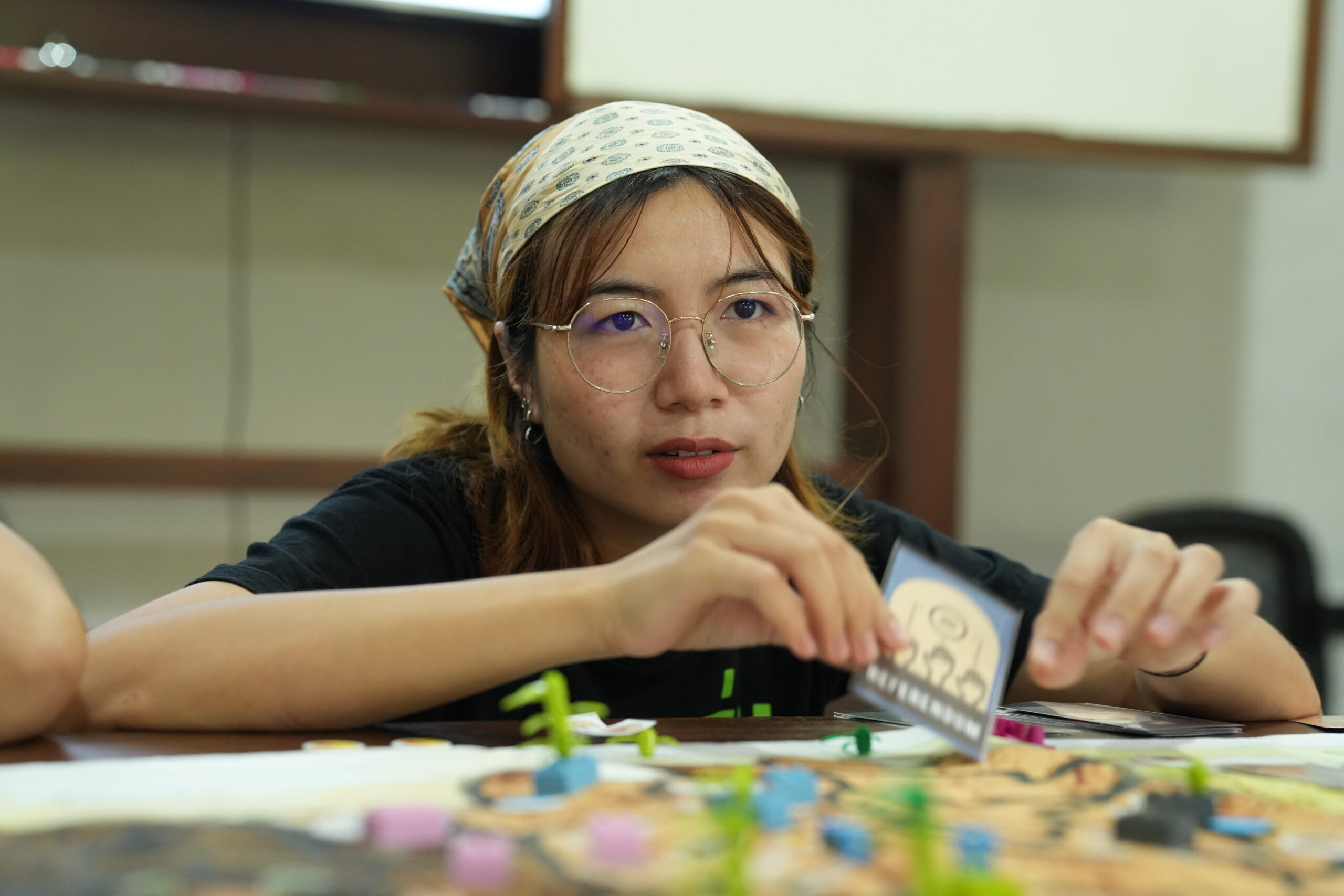
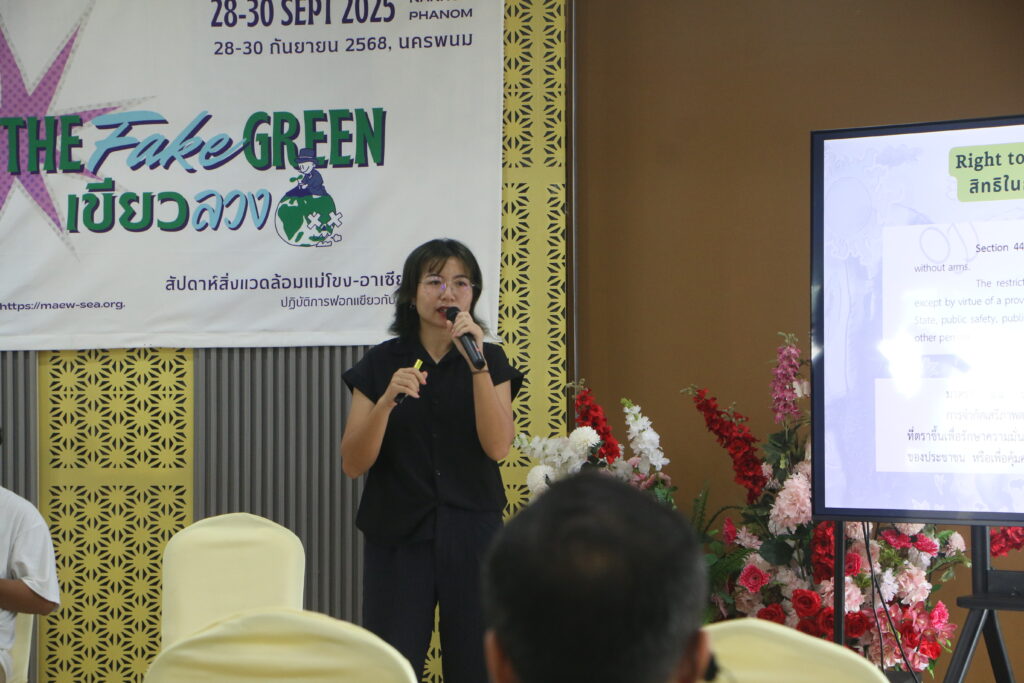
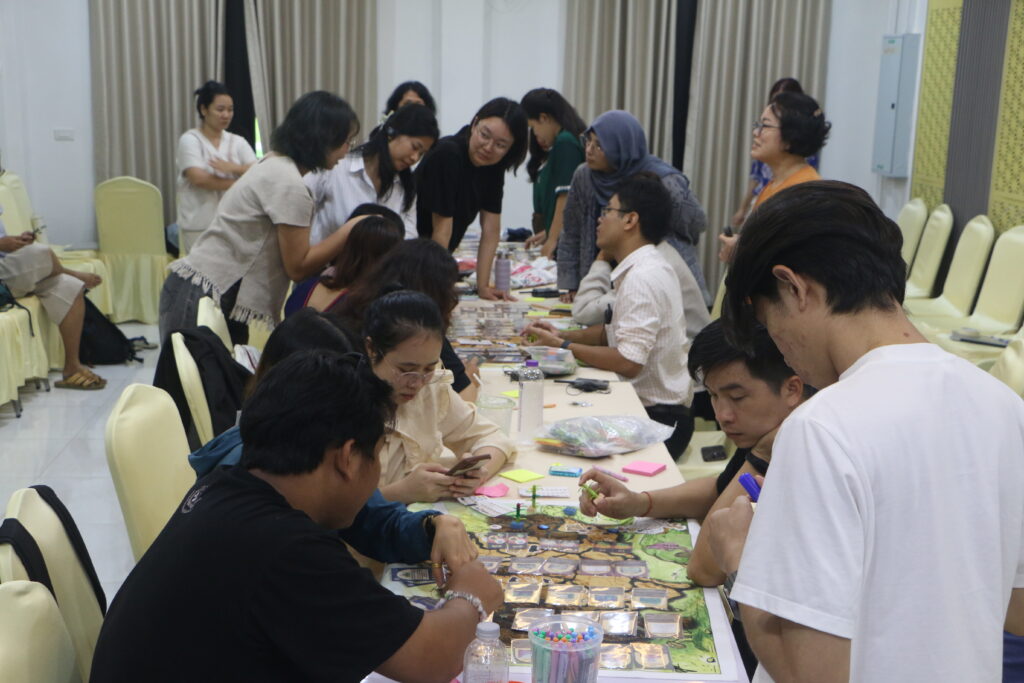
In September, Dear put her experience into practice by organizing a workshop at the Mekong ASEAN Environmental Week alongside two other alumni network members. “I was a trainer at a workshop on board game development,” she says. The workshop taught participants from Thailand, Vietnam, and Myanmar about how they can create and use board games as an advocacy tool.
Through board games, defenders can tell a compelling story of communities and lands under threat in an interactive way. “You can rotate the board game as a capitalist or as a citizen,” she said of a board game she had developed about the impact of Thai forest laws on Indigenous communities.
The event sparked new ideas, including creating board games to highlight issues such as rare earth mining in Myanmar. “Meeting up with other alumni is a great aspect of the Mekong ASEAN Environmental Week,” Dear says. “I got a lot of ideas from other participants.”
Looking Ahead to a Future of Equality for Indigenous Communities
Looking ahead to the future, Dear hopes that the movement she’s helping to build will continue growing. “We need to collaborate to address these issues together and figure out solutions,” she says.
Her call to others is simple: “Let’s make collaboration something appealing to other people.”
Through law, advocacy, and regional partnership, Dear is helping expand the space for communities across the Mekong to claim their rights. Her efforts are helping to shape a future where equality isn’t just promised in law but realized in practice, in Thailand and beyond.