Summary
The 2021 attempted coup in Myanmar shattered centralized land governance and opened political space for the Karenni people to reimagine land and federal futures. In this period of overlapping authorities and emergent federal institutions, land and natural resource governance has become the foundation of justice and political legitimacy. The 5Rs Framework—Recognition, Restitution, Redistribution, Regeneration, and Representation—offers an actionable path to address dispossession, inequality, ecological damage, and exclusion. Together, the 5Rs function as a living process to transform the crisis into a just and genuinely federal future for the Karenni State.
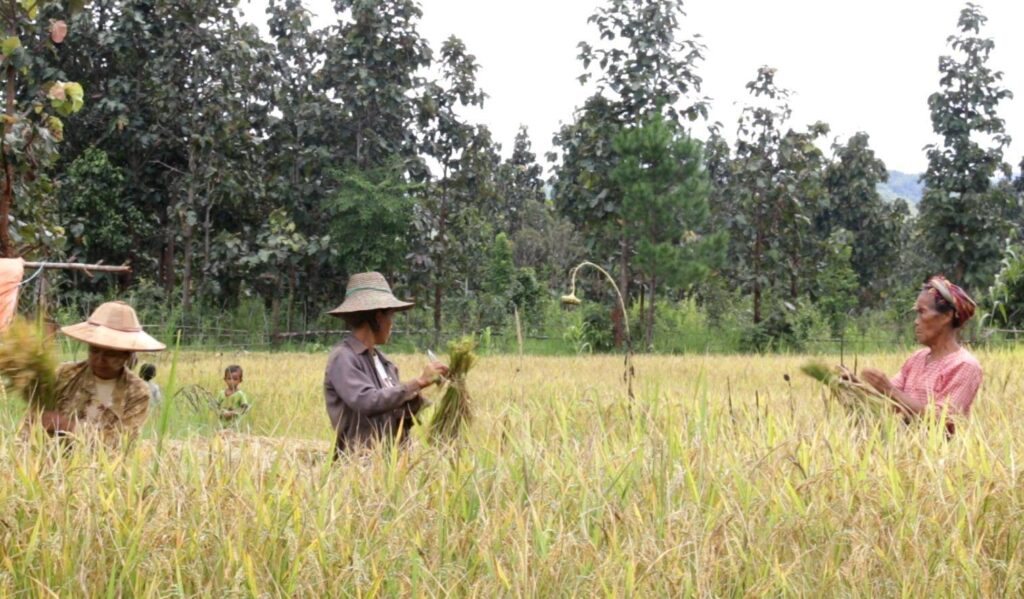
Photo credit: Kayah EarthRights Action Network – KEAN.
Howard
The 2021 attempted coup in Myanmar did more than shatter Myanmar’s fragile democratic transition. In Karenni State and across all ethnic homelands, it collapsed the already crumbling fences of a centralized order. The 2008 Constitution, which claimed state ownership and control over land, has lost its limited authority amid conflict and public resistance. What ethnic people face today is not merely a political crisis but a profound moment of both chaos and possibility. The collapse of a Bamar-centric system of dispossession has, paradoxically, opened political space to imagine and build something genuinely rooted in the own ways of indigenous people.
For generations, the relationship between the Karenni people and the Karenni land has been defined by successive regimes of colonization and control. Before 1875, the Indigenous Karenni people governed themselves (Minority Rights Group, 2017). The British colonial era began with the great confiscation of their autonomy, designating their territory a “restricted” zone to be managed and exploited. In each subsequent era, socialist nationalization and the SLORC/SPDC’s brutal campaigns of land grabs for military expansion and resource extraction laid down another stratum of loss (Kayan EarthRights Action Network, 2026). The decade of the so-called “democratic transition” (2010-2020) merely provided a legal mask for this enduring system of central control and extraction. Now, in this “period of collapsing administration,” the Karenni people inhabit a landscape of profound vulnerability, yet one that flickers with emergent opportunity.
Since the coup, Karenni State has experienced overlapping governance systems and sudden breaks in long-standing political arrangements. The old order has been ruptured, creating a vacuum in which multiple governance systems now operate simultaneously. De facto governance is held by customary Karenni systems, Ethnic Resistance Organization (ERO) administrations, and post-coup resistance governance bodies. An emergent federal structure is taking shape through institutions such as the Karenni State Consultative Council (KSCC), the Karenni State Interim Executive Council (KSIEC) and related bodies. These are not states in the conventional sense, but rather what political anthropologist James Scott might recognize as “state-like effects” that emerge organically from below as communities strive for order, justice, and self-determination.
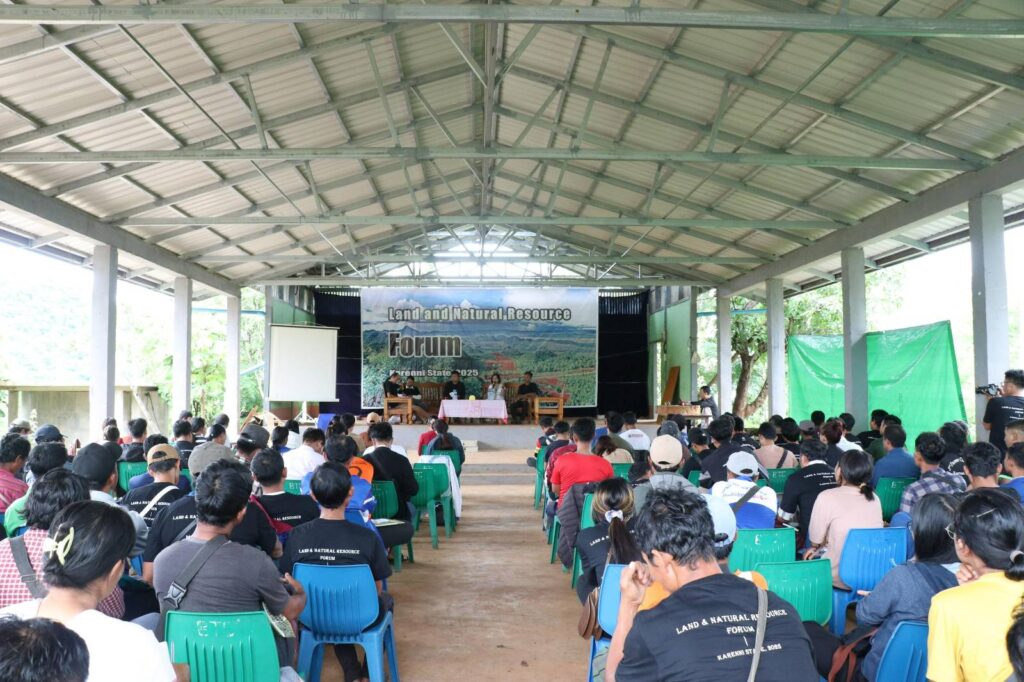
This is the test of revolution. While fighting for a federal democracy and demolishing dictatorship, the revolutionary movement is engaged in the monumental task of developing executive, judicial, and legislative functions from the ground up. Among these, the governance of land and natural resources stands as a foundational issue. It is the bedrock upon which social justice, economic survival, environmental stewardship, and ultimately, political legitimacy will be built. The future federal union cannot be an abstract political concept; it must be rooted in a reformed land and resource sector that actively benefits indigenous peoples and all ethnic communities across different social classes within the state.
This is where the 5Rs Framework becomes essential. It moves beyond diagnosing the layered crises of Karenni land governance to offering an actionable and principled path forward. It is a framework born of necessity, in which the collapse of the old system demands the conscious construction of a new one. Each “R” reinforces and requires the others, creating a virtuous cycle of legitimacy and justice.
Recognition is the foundation. It provides the legal and social bedrock by validating who legitimately belongs to the land and has the right to govern it. This is not a simple act of cataloging current occupants. True recognition must be forward-looking and justice-oriented, ensuring it also provides for “those who should have access to land according to the 5R principles. ” In the diverse cultural landscape of Karenni State, this means formally recognizing the pluralistic mosaic of customary tenure systems, communal village lands, lineage-based holdings, and individual family plots, while acknowledging the community-wide consensus required for decisions affecting the common good. This recognition provides a stable foundation on which other reforms can be built.
Restitution directly addresses the historical and ongoing wounds of displacement and confiscation. It operationalizes the moral imperative of recognition by actively restoring land and life to the most vulnerable: those displaced by conflict, megaprojects, and state violence. Crucially, as defined, restitution is not merely the return of a plot but the restoration of the entire life-world, access to forests, water, sacred sites, and the social infrastructure of clinics, schools, and roads. This process requires meticulous documentation, transparent procedures, and collaboration between customary and interim governance structures to heal past injustices.
Redistribution confronts the structural inequalities embedded in the legacies of past systems. It asks the politically courageous question of what constitutes a fair share. By targeting public lands and excessively large private estates, particularly those tied to extractive industries, for redistribution to the landless and near-landless, it seeks to create a more balanced and socially just agrarian structure. This process must be handled with immense care to avoid creating new conflicts and to require delicate negotiations within communities where some hold large customary claims.
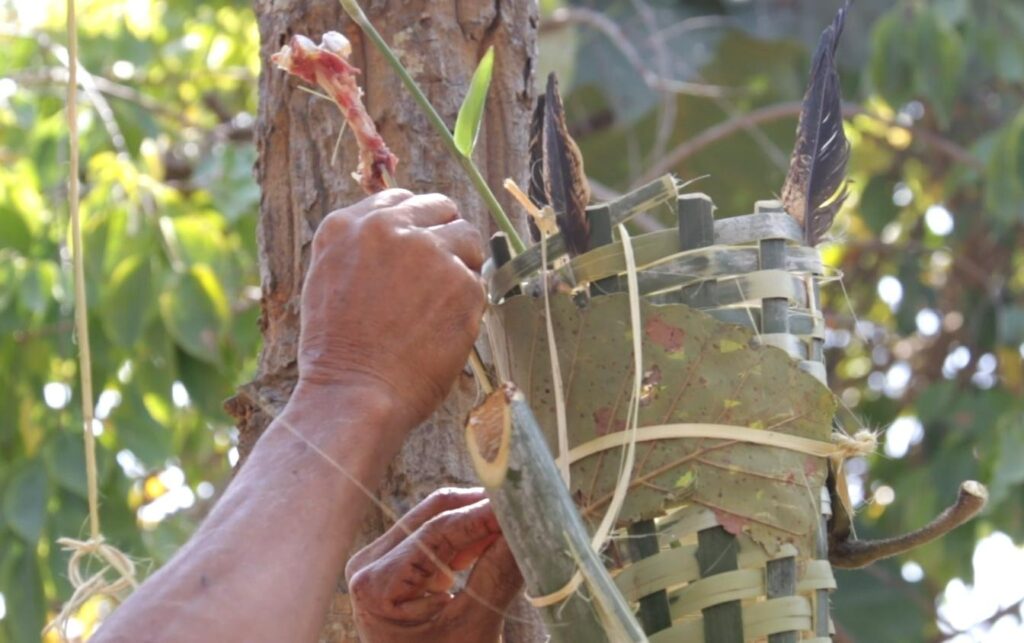
ကြက်ရိုးထိုးပွဲ (Kyet Yoe Htae Pwe), Traditional bamboo pole raising ceremony for favorable weather in Karenni.
Regeneration is the covenant with the future. It recognizes that land justice is ecologically hollow if the land itself is dying. Decades of unsustainable extraction, deforestation, and mining have degraded Karenni’s life-support systems. Regeneration represents a fundamental philosophical shift from an extractive to a reciprocal relationship with nature. It means rehabilitating damaged landscapes, promoting sustainable agroecology, enforcing strict regulations on destructive industries, and implementing long-term strategies for climate resilience. It is the commitment that the land restored and redistributed will be fertile and life-sustaining for generations to come.
Representation is the keystone of legitimacy. It is the governing principle that ensures the other four Rs are not imposed from above but are forged through legitimate, collective will. In the Karenni context, with its multiple layers of authority, such as customary, EAO, civil society, and emerging interim bodies, representation is inherently complex. It requires the creation of inclusive decision-making tables in which village elders, women’s groups, youth representatives, EAOs, and technical experts can negotiate, plan, and decide together. This is the practical work of building a federal democracy from the ground up, ensuring that land governance reflects and serves the people it is meant to govern.
The post-coup era in Karenni State is not a vacuum; it is a field of contestation and creation. While fighting to demolish the dictatorship, the parallel work of constructing a just society cannot wait. Karenni has already taken this step through the development of the Karenni State Interim Land Policy, which affirms that all people in Karenni State have the right to live with dignity and secure livelihoods, with equitable access to land, water, forests, and natural resources. The policy recognizes people’s rights to land ownership, use, and management in accordance with the collective will of the Karenni people, while prioritizing environmental sustainability and ecological justice.
Land and resource governance is the most tangible, material arena for this construction. By intertwining recognition, restitution, redistribution, regeneration, and representation, the Karenni people have the tools to transform a legacy of dispossession into a foundation of sovereignty. This is how the flickering opportunity of this chaotic period can be fanned into a lasting flame. By building systems that, by their very design, are more just, more ecological, and more democratic than those they seek to replace. The 5Rs are not a final blueprint but a living process, a commitment to continually asking the right questions as they cultivate the ground for their own future.
Reference
Franco, J. C., & Borras Jr., S. M. (2021). The 5Rs in Myanmar: Five principles for a future federal democratic system where rural working people can flourish. Transnational Institute.
Kayah EarthRights Action Network. (2026). Approach to Promote and Protect the Land and Natural Resource Rights of the Karenni Indigenous People.
Karen Human Rights Group. (n.d.). Karenni (Kayah) State: Continuing Flight of Villagers to Thailand. https://khrg.org/my/node/1092
Karenni State Consultative Council. (2025). Karenni State Interim Land Policy. https://ieckarenni.org/karenni-state-interim-land-policy/
Minority Rights Group. (2017, August). Karenni in Myanmar: Historical Context. https://minorityrights.org/communities/karenni/#:~:text=Partly%20because%20of%20their%20location,despite%20their%20relatively%20small%20numbers.
Norwegian Refugee Council. (2001). Profile of Internal Displacement: Myanmar (Burma).