
- El poder judicial de Cusco ordenó que se archivara el caso en contra de los líderes y la lideresa de la provincia de Chumbivilcas, quienes enfrentan un proceso de criminalización por denunciar los daños ambientales de las operaciones de la empresa minera Anabi, reafirmando así las dos sentencias previas a su favor.
Cusco, 10 de agosto de 2026 — El Colegiado B de Cusco absolvió a los nueve líderes y una lideresa de Chumbivilcas acusados por la empresa minera Anabi S.A.C. de robo agravado y secuestro. Denuncias que fueron presentadas tras las protestas pacíficas que la población llevó a cabo, entre diciembre de 2011 y febrero de 2012, ante la contaminación ambiental provocada por las operaciones de la minera en la zona.
Los jueces Miguel Angel Castelo Andia, Carlos Santos Perez y Yemis Mamani Huillca determinaron que la Fiscalía no acreditó la existencia de los delitos ni la responsabilidad de las personas acusadas, y ordenaron que archive el caso. Al cierre de la lectura de la sentencia, la Fiscalía manifestó su inconformidad con esta decisión.
“Esta decisión es justa. Los jueces han analizado y revisado los documentos y se han dado cuenta que no somos culpables. Una vez más, la justicia nos da la razón. Esperamos que la fiscalía de Chumbivilcas no apele esta decisión”, señaló Julián Alejo Atacuri Mancilla, uno de los diez dirigentes acusados.
Es importante señalar que, a pesar de haber sido absueltos en dos instancias previas en 2020 y 2021, el proceso fue reabierto tras un recurso interpuesto por la Fiscalía y la Procuraduría ante la Corte Suprema. En este nuevo juicio oral, que inició en marzo de 2025, las autoridades llegaron a solicitar penas de hasta 30 años de prisión y reparaciones civiles millonarias.
Katherine Paucar, abogada de EarthRights International (ERI) organización que representa a uno de los líderes acusados, señaló: “Celebramos esta decisión, pero creemos que es inaceptable que este hostigamiento judicial se haya sostenido por más de catorce años”. Además, añadió que “la justicia no puede seguir siendo utilizada como una herramienta para perseguir a personas inocentes por el simple hecho de alzar sus voces para denunciar los daños ambientales causados por las empresas”.
El caso Chumbivilcas es un claro ejemplo de la criminalización a las personas defensoras en Perú: acusaciones en contra de los líderes sociales en el marco de protestas sociales basadas en testimonios de individuos vinculados a las propias empresas denunciantes, sometiendo a las personas a prolongados procesos judiciales e investigaciones plagadas de deficiencias soportadas por pruebas insuficientes o cuya credibilidad es cuestionable.
¿Cómo es posible que las autoridades en lugar de proteger los derechos y procurar el bienestar de las comunidades, defiendan los intereses de las empresas extractivas? Para asegurar una sociedad justa es fundamental que se detenga la persecución y señalamiento a las y los líderes comunitarios y defensores ambientales.
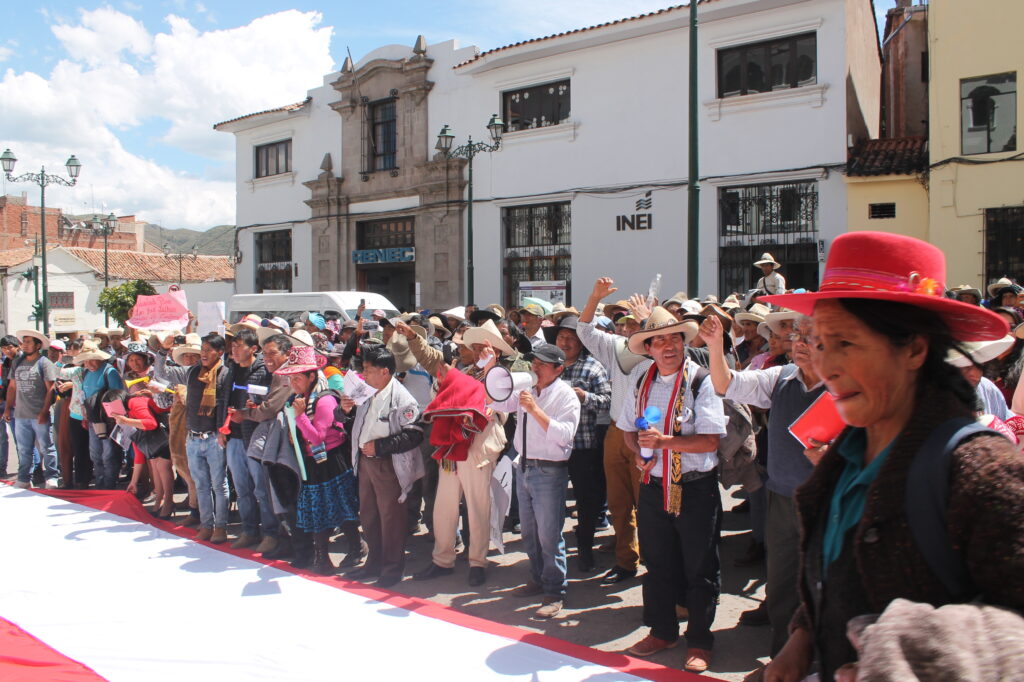
El conflicto socio ambiental en Chumbivilcas
Por décadas las comunidades de Chumbivilcas, vienen denunciando la contaminación de ecosistemas claves de los ríos Molinos y Santo Tomás causados por las actividades extractivas de la minera Anabi. Así como, la afectación de las zonas agrícolas contiguas a las carreteras debido al paso constante de camiones pesados que levantan grandes nubes de polvo que dañan los suelos.
La empresa Anabi ha acumulado un historial de infracciones ambientales y sanciones impuestas por el Organismo de Evaluación y Fiscalización Ambiental (OEFA) y la Autoridad Nacional del Agua (ANA) por la mala gestión de residuos e incumplir con los Estudios de Impacto Ambiental.
La falta de atención oportuna por parte de las autoridades para atender estos reclamos y el incumplimiento de sus obligaciones de realizar un monitoreo ambiental, han derivado en las movilizaciones de la comunidad que claman al Estado que atienda esta problemática.
Para más detalles del caso:
Contacto de prensa:
María Paula Riveros
Manager de comunicaciones para la Oficina de Latinoamérica
EarthRights International
___________________________
Sobre EarthRights International
EarthRights International (ERI) es una organización internacional sin fines de lucro que desde 1995 combina el poder de la ley con el poder de las personas para defender los derechos humanos y el medio ambiente. En América Latina, ERI acompaña a comunidades campesinas e indígenas para hacer frente a los abusos cometidos por empresas y Estados, impulsando litigios estratégicos para fortalecer la resiliencia de las comunidades.