
- Although Volcan’s liability has been established in at least 50 administrative proceedings by OEFA and ANA, the First Constitutional Court of Lima has missed an opportunity to resolve this landmark case of mining-related contamination caused by companies in Peru.
- The Provincial Municipality of Pasco, with legal support from EarthRights International, will appeal the ruling that denies the people of Cerro de Pasco access to justice.
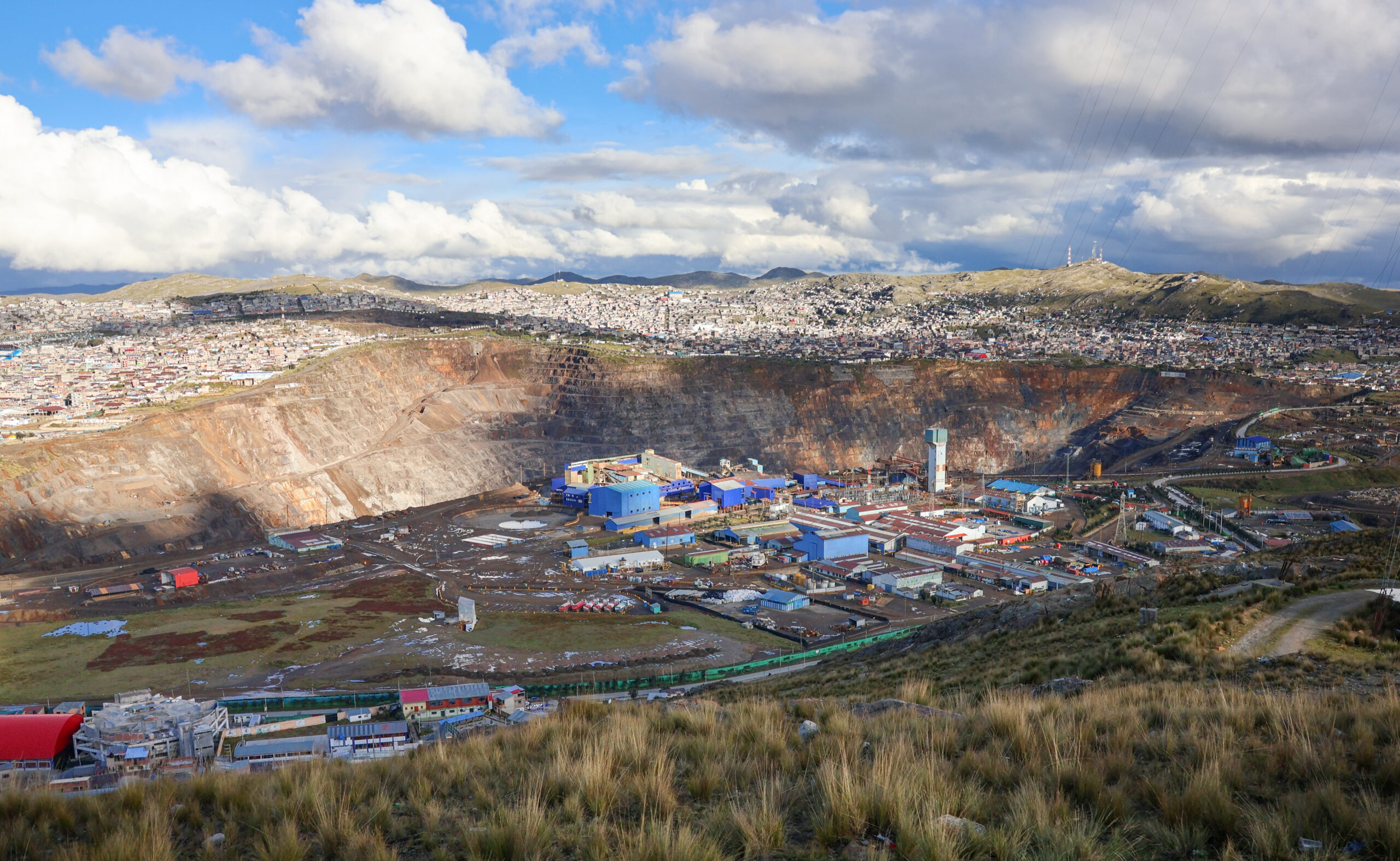
Lima, Peru, November 23, 2026 – The First Constitutional Court of Lima issued an unfavorable ruling declaring inadmissible the petition for constitutional protection filed by the mayor of the Provincial Municipality of Pasco against the mining company Volcan and its subsidiaries (Administradora Cerro, Minera Paragsha, and Óxidos de Pasco), due to the severe environmental contamination caused by heavy metals in the city of Cerro de Pasco, Peru.
Prior to this judicial ruling, on October 29, 2026, the Provincial Municipality of Pasco presented its oral arguments to the court, requesting that it recognize the human rights abuses committed by the company and declare the petition for constitutional protection filed on May 28 to be well-founded; this petition is supported by legal counsel and assistance from EarthRights International. The ruling, dated November 13, 2026, was recently served on the Municipal Attorney, who represents the Municipality in court.
In this decision, the judge notes that, although the severity of the environmental situation in Cerro de Pasco is not in dispute, the protection of the right to a healthy environment is not the exclusive purview of the constitutional court, but also falls within the jurisdiction of other Peruvian government agencies responsible for the environmental system, such as the Environmental Assessment and Enforcement Agency (OEFA) and the National Water Authority (ANA). Furthermore, he asserts that the amparo proceeding lacks the evidentiary phase necessary to resolve the pollution case, since it would require expert testimony and even the judicial inspection requested by the mayor in the complaint—which would exceed the very nature of the amparo process.
However, the judge fails to acknowledge that the case file already contains evidence demonstrating the severe environmental contamination and the liability of the Volcan companies. Among these are not only the scientific and public reports from Source International but also the rulings of Peruvian government agencies themselves, such as the OEFA and the ANA, which have established the liability of the mining companies in at least 50 administrative sanction proceedings (PAS).
In his ruling, the judge concludes that the amparo petition is inadmissible because he considers that there are other legal avenues for protecting the rights of the residents of Cerro de Pasco to a healthy environment, to health, to personal integrity, and others, asserting that what is sought in the complaint exceeds the scope of what the amparo process can resolve, since he argues that it concerns the formulation of public policies.
This conclusion demonstrates that the court sought to avoid ruling on the case, despite the seriousness of the facts. In the complaint, we requested nothing more than measures to ensure that Volcan assumes responsibility for repairing the damages attributable to it, through environmental restoration and the provision of health care to the affected population. With this decision, the judge also shirks his duty, as a constitutional judge, to protect and guarantee the violated human rights, even though the amparo proceeding is precisely the mechanism intended to provide that protection.
“We regret that the judge has turned down the opportunity he had to resolve a matter of enormous importance, as the serious damage to the environment and public health caused by mining companies has made Cerro de Pasco an emblematic case not only for Peru but for the world,” said Itzel Silva, EarthRights International’s legal director for Latin America.
In this regard, it is worth noting that on October 28, various United Nations special mechanisms weighed in on the case, pointing out that the judicial process represents an important opportunity to ensure that companies fully respect human rights and take responsibility for remedying the negative impacts they have caused or contributed to.
The Provincial Municipality of Pasco, with legal support from EarthRights, will file an appeal in the coming days against the ruling that denies access to justice for the residents of Cerro de Pasco, who remain exposed to alarming levels of heavy metals.
For more information about the case:
Environmental Contamination in Cerro de Pasco
Media Contact:
Valentina Arango Correa
EarthRights International Latin America Office
valentina.arango@earthrighs.org