MISSION
EarthRights combines the power of law and the power of people to defend human rights and the environment.
VISION
We envision a world where every community has the power to seek justice, defend their rights, and hold corporations, financial institutions, and governments accountable; a world where people live with dignity and self-determination, and where the environments that sustain us are fiercely protected and restored. In the face of the climate crisis, we see a future built on resilience, equity, and the unwavering defense of human rights and the planet.
LETTER FROM THE EXECUTIVE DIRECTOR
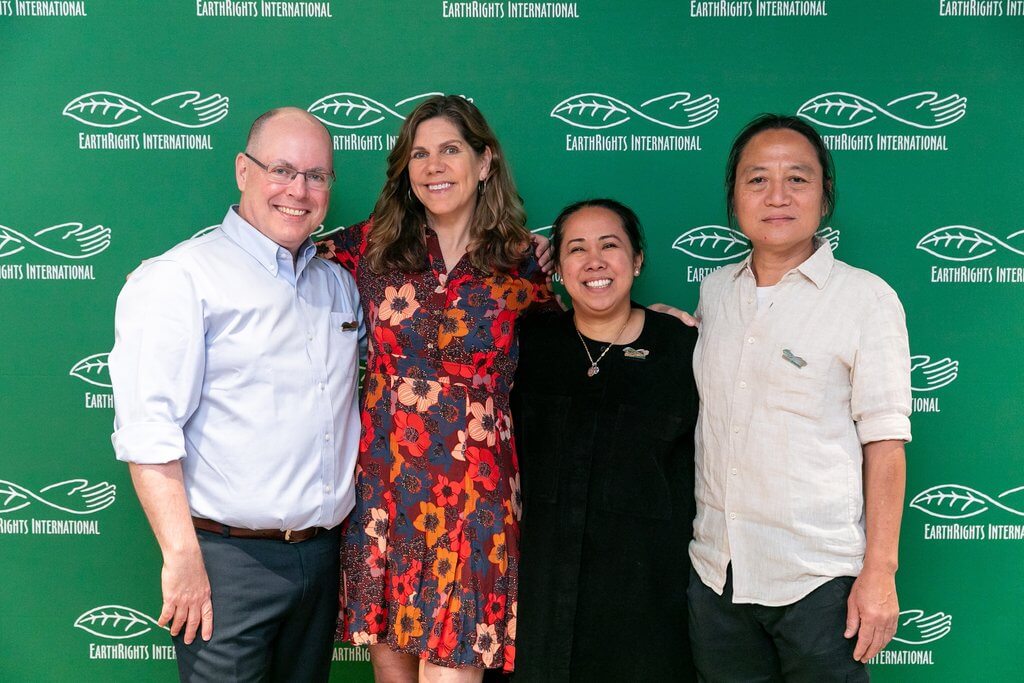
In our 30th year, I’m proud to say that we at EarthRights are still doing what we do best: standing with communities harmed by state and corporate abuse, and showing up for a good Fight.
Rather than treating corporate abuse, human rights violations, and climate destruction as inevitable—the “price of doing business”—we continue working directly with Indigenous and frontline communities to ensure that their experiences shape legal precedent, policies, and concrete remedies.
From major settlements that provide significant measures of justice to survivors of corporate abuse, to landmark Supreme Court victories—including ending the immunity that once shielded multilateral development banks—to the first ever U.S. jury verdict holding a major American corporation liable for overseas human rights violations, our litigation and corporate campaigns have helped build the legal architecture for corporate accountability, so the costs of abuse and climate harm are not borne by the people most affected.
From community leaders to members of parliament and heads of government agencies, our alumni continue to carry the torch of the EarthRights School and our specialized training programs. They embrace these various roles with the skills, knowledge, and network support provided by the education programs we run in places where resources are scarce, threats are immediate, and opportunities for expert human rights and environmental training are rare.
At 30 years, our impact is undeniable, our community strong, and our mission ever critical.
Yet, this year tested us against shifting political landscapes. But then again, our work has never depended on stable political conditions. We’ve always thrived in imperfect circumstances, made perfect by the power of our partners and the strength of our strategies. This 2025 impact report demonstrates the continued relevance of EarthRights’ mission. We begin with an overview of our 2025 to 2029 strategic plan and theory of change, building on three decades of impact to address the most pressing challenges of our time: the climate crisis, corporate and institutional impunity for harms, and rising threats against defenders of Justice.
We then highlight 2025 examples of our model — deeply anchored in communities and highly effective in courts and international spaces — in which lived experiences serve as credible evidence to make institutions more accountable.
- Our case representing the City and County of Boulder against Exxon Mobil and Suncor entities for their significant responsibility for knowingly contributing to climate change and deceiving the public about the dangers of their products: This local effort to protect Colorado communities has become one of the nation’s most closely watched climate cases. In May 2025, the Colorado Supreme Court ruled the case could proceed; now The U.S. Supreme Court has agreed to hear it, a decision that could reshape communities’ ability to seek redress for climate harms nationwide.
- We also highlight our expanding work in Community Resilience and Environmental Justice, supporting frontline U.S. communities and drawing on our Mekong experiences to build community-centered climate justice strategies.
- And we showcase how our School and training programs in the Mekong and Latin America produce leaders that strengthen civil societies for more democratic, inclusive, rights-respecting development.
- Lastly, we share key wins from lawsuits across Latin America, the Mekong, and the U.S.
As we enter our 31st year, we invite you to continue journeying with us—strong in our commitment to put people at the center of justice and accountability, combining grassroots power-building with a remarkable track record in legal precedent and successful advocacy for human rights and environmental protection all over the world. We’re also thrilled to unveil our refreshed website and organizational identity, which will help bring our mission into the future through stronger storytelling and online community engagement.
Thank you for walking this path with us!
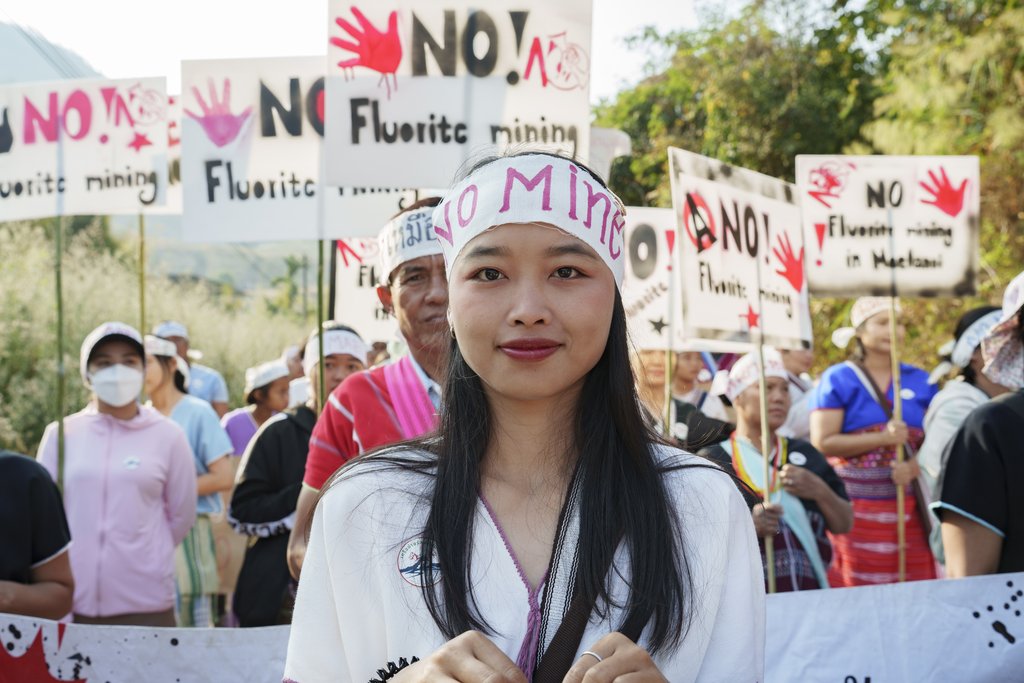
Our 2025-2029 Strategic Plan
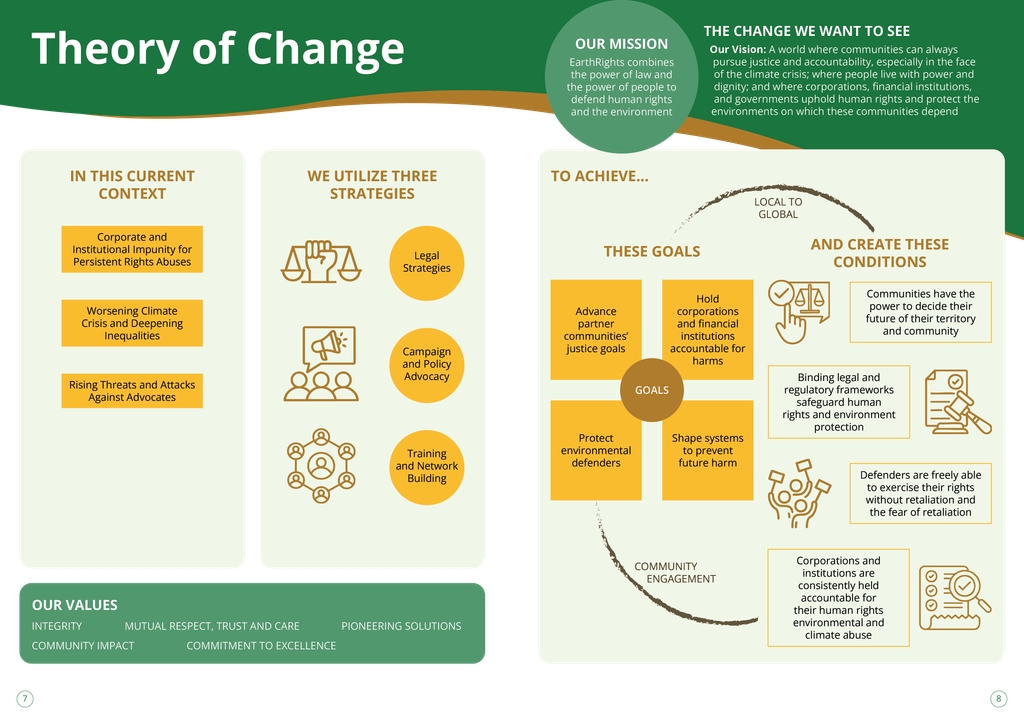
Our new strategic plan charts an ambitious course for advancing justice, corporate accountability, environmental protection, and climate resilience worldwide. This plan builds on three decades of impactful legal and advocacy work that has addressed the most pressing challenges of our time: the climate crisis, corporate and institutional impunity for harms, and rising threats against defenders of justice.
With a unified global team and strong partnerships across the United States, Mekong region, Latin America, and beyond, EarthRights combines the power of law and the power of people to defend human rights and the environment. This strategic vision draws on the deep expertise of our staff, allies, and partners, to offer a clear framework for transformative impact. To achieve this vision and address the multi-faceted challenges we face, we have articulated four ambitious goal areas that will guide our efforts across our over the next five years. These four goal areas are:
We strive to shape legal and regulatory frameworks that establish strong, enforceable safeguards for human rights and environmental protections, and to prevent future harms.
Theory of Change
OUR IMPACT
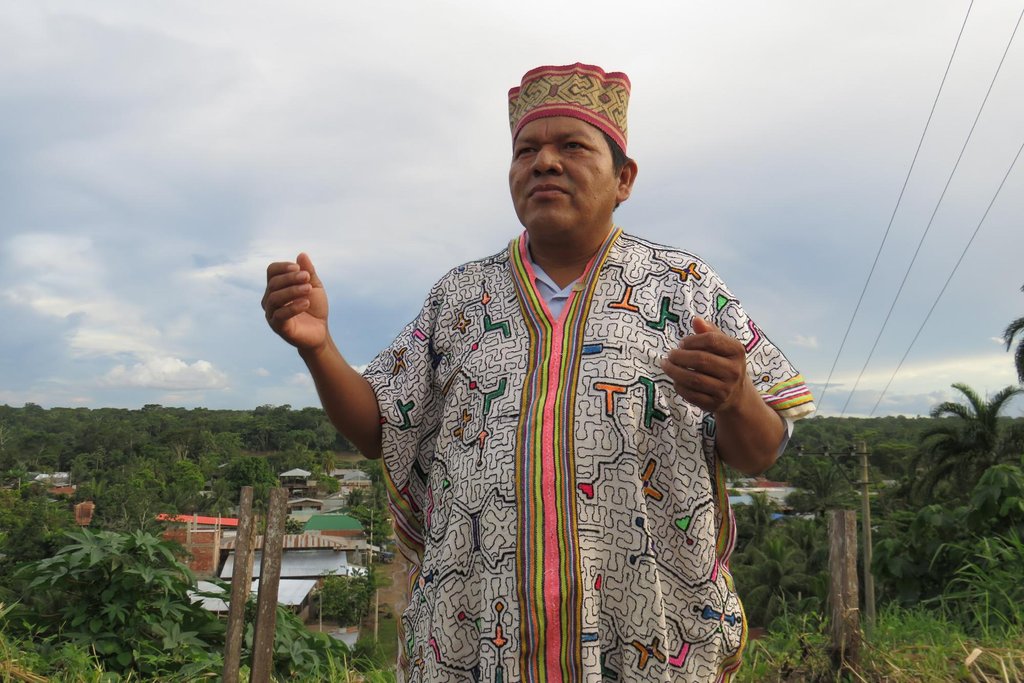
In Latin America, the misuse of the judicial system to unjustly persecute and punish those
who speak out in defense of their territory and their rights is a daily reality. Defenders are
persecuted for demanding that companies and governments avoid causing harm to the
environment and their communities, and that, in the event that such harm occurs, they repair
or mitigate it.
This phenomenon is commonly known as criminalization and typically occurs in two main
contexts. The first occurs when defenders, particularly visible community leaders, are accused
of crimes they did not commit as retaliation for their participation in peaceful protests. The
second occurs when private companies and/or governments file complaints or lawsuits against
defenders under the argument that they were defamed and/or harmed, to intimidate and
exhaust those who defend their rights and land. This entire strategy aims to delegitimize the
work of defenders, to turn the legitimate exercise of the legitimate exercise of a right into an
illegal act, and to create fear to demobilize peaceful protests against the so-called investment
and development projects.
These legal proceedings can drag on for years through lengthy trials and appeals, causing
extreme stress, physical and mental health impacts, economic deterioration, and even social
stigmatization for defenders, once their judicial situation becomes public.
A very important case that EarthRights has litigated and that illustrates this phenomenon in
Peru is the case against FENAMAD.
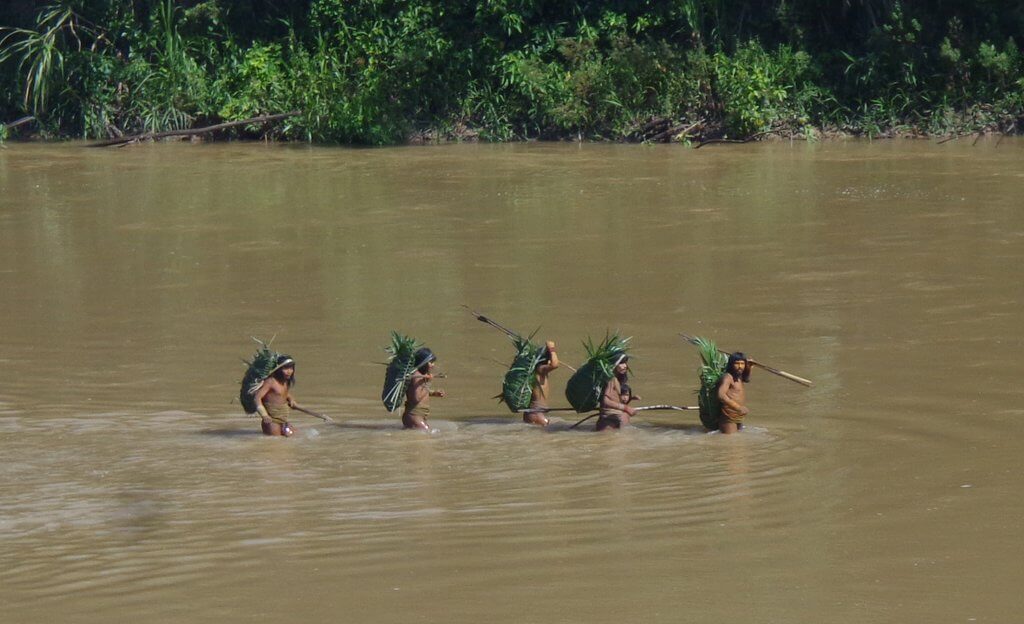
The Mashco Piro people, who live in voluntary isolation, depend on hunting and gathering
activities for their survival due to their nomadic lifestyle. They live between the Peruvian
and Brazilian border, including areas such as the Madre de Dios Territorial Reserve. Their
situation is highly vulnerable: contact with the outside world exposes them to common
illnesses that can be lethal for their health.
Similarly, encounters with outsiders have triggered conflicts that endanger their lives and
those of the workers operating in the region. These are risks that FENAMAD, the Indigenous
organization representing communities along the Madre de Dios River basin, has warned of
before national and international bodies.
In 2020, at the height of the COVID-19 pandemic, FENAMAD issued a public statement
demanding that the Peruvian State protect the integrity of the Mashco Piro people and halt
extractive activities in the area. As a consequence, both FENAMAD and its then-president,
Julio Cusurichi, were sued for defamation by a logging company.
The Judiciary of Madre de Dios ruled twice against FENAMAD, siding with the logging
company. The rulings not only required the organization to pay $5,000 in civil damages to the
company, but also forced it to publish a letter of self-incrimination as advisor of ilegal loggers
drafted by the company itself.
In July 2025, thanks to a counterclaim (know in Peru as amparo contra amparo) that
EarthRights filed in 2022 against the rulings issued by the Madre de Dios courts, the Supreme
Court of Peru recognized that the fundamental rights of FENAMAD and Julio Cusurichi,
specifically the rights to due process, and freedom of opinion, expression, and dissemination
of opinions, had been violated, and ruled in their favor. The judgment emphasized that,
under national and international standards, the judicial authorities in Madre de Dios failed to
apply an intercultural or preventive approach, both essential in cases involving the protection
of Indigenous peoples’ rights, and that they had also adopted an incorrect interpretation of
the law.
Although this ruling represented a victory for FENAMAD and Indigenous organizations in
Peru, the judicial persecution left wounds that the judgment cannot erase. The organization
and its leaders faced stigmatization and public accusations, in addition to legal expenses,
despite committing no wrongdoing. They endured emotional strain that generated fear and
uncertainty throughout the process.
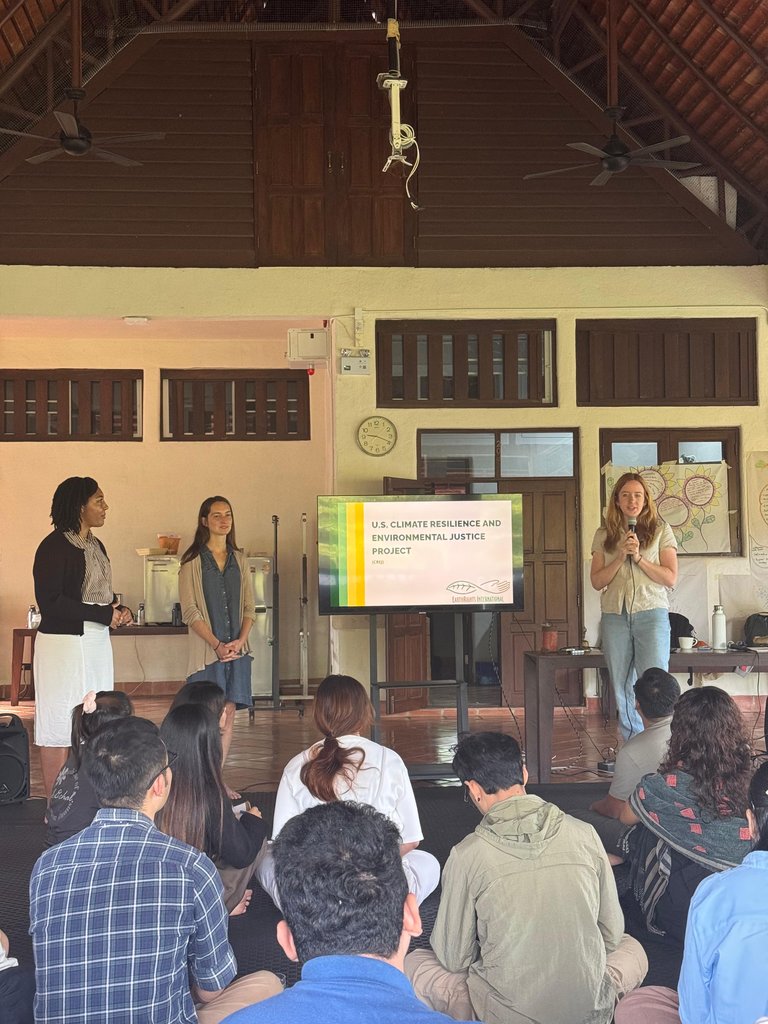
In November 2025, EarthRights’ U.S. Climate Resilience and Environmental Justice (CREJ)
team spent two weeks in Thailand meeting our colleagues from the Mekong office and
learning from their experience advocating alongside communities through political change
and in restricted environments. At the end of our trip, we had the opportunity to share a
presentation at the Mitharsuu Center as part of the Mekong Legal Advocacy Institute training
program on how we have applied lessons of community lawyering and movement building
from our colleagues’ work in the Mekong region to similar challenges in the United States.
We talked about our work supporting Black communities who either face high cancer rates
from toxic pollution or are deprived access to basic infrastructure such as water and sewer
services. We reflected on our work in partnership with coastal Indigenous communities who
face some of the most disproportionate impacts of climate change. We were honest about
some of the setbacks we have faced and how we have had to pivot to other strategies.
Our audience was a combination of our colleagues from the Mekong office and lawyers and
advocates from across Southeast Asia. Although many of them did not have much of a prior
understanding of structural racism in the United States and its impact on environmental
justice, they were quick to understand how inequality permeates U.S. political and social
contexts and mirrors familiar dynamics of oppression and exploitation. But beyond the
similarities, what stood out to them was the fact that many U.S. communities lack basic
needs, despite the country’s extreme wealth – a far cry from the false narrative of American
exceptionalism.
This trip to Thailand was an enriching experience for our team. Newly launched last year, CREJ
seeks to bring EarthRights’ decades-long expertise of harnessing community power in the
Mekong and other parts of the world to the United States. Seeing the successes, creativity,
and resilience of our colleagues in Thailand – particularly the breadth of strategies with
and deep support to the Kaboedin community to stop a coal mine from devastating their
traditional way of life – left us inspired and with ideas of how we can continue to support our
community partners despite facing setbacks. This trip affirmed why the EarthRights model
is greatly needed in the United States and why it is necessary to take on difficult cases or
campaigns.
Some may ask, “aren’t U.S. communities better off than communities in other parts of
the world?” It is true that our community partners live in one of the most well resourced
countries in the world. And it is also true that the United States is one of the most significant
drivers of climate change, and international focus has rightly been on holding the country
responsible for its outsized role in the crisis. But BIPOC frontline communities often have no
meaningful decision making role and also bear the burden of climate destructive decisions
that directly affect their land and resources. We have seen how corporations and federal,
state, and local governments have formed a symbiotic relationship to deny U.S. communities
their fundamental rights to a healthy environment, threaten Indigenous cultural survival,
destroy historic Black sites such as ancestral burial grounds, and hinder overall community
prosperity. Particularly in the U.S. South, the “plantation-to-plant” pipeline takes advantage of
latent legacies of slavery and discrimination to impede and disenfranchise community power.
Industry situates itself on top of these communities and overburdens them with health and
safety risks.
The work of the CREJ team recognizes that addressing political and corporate threats
requires community centered strategies for achieving climate justice. We work with Black
and Indigenous communities in the South that face unique challenges but share some
commonalities: their fights are long and tough and go against some of the most powerful
actors in the world. These challenges cannot be solved overnight and often require creativity
and pivoting when necessary. This is why we prioritize long-lasting, trusted relationships
with our community partners. When communities are equipped to lead, advocate, and build
collective power, transformative change becomes possible.
Our work is grounded in the belief that environmental protection, climate resilience, and
human dignity are inseparable. By partnering with frontline communities and advancing
equitable solutions, we are helping build a future where all people can live in safe, healthy,
and thriving environments.
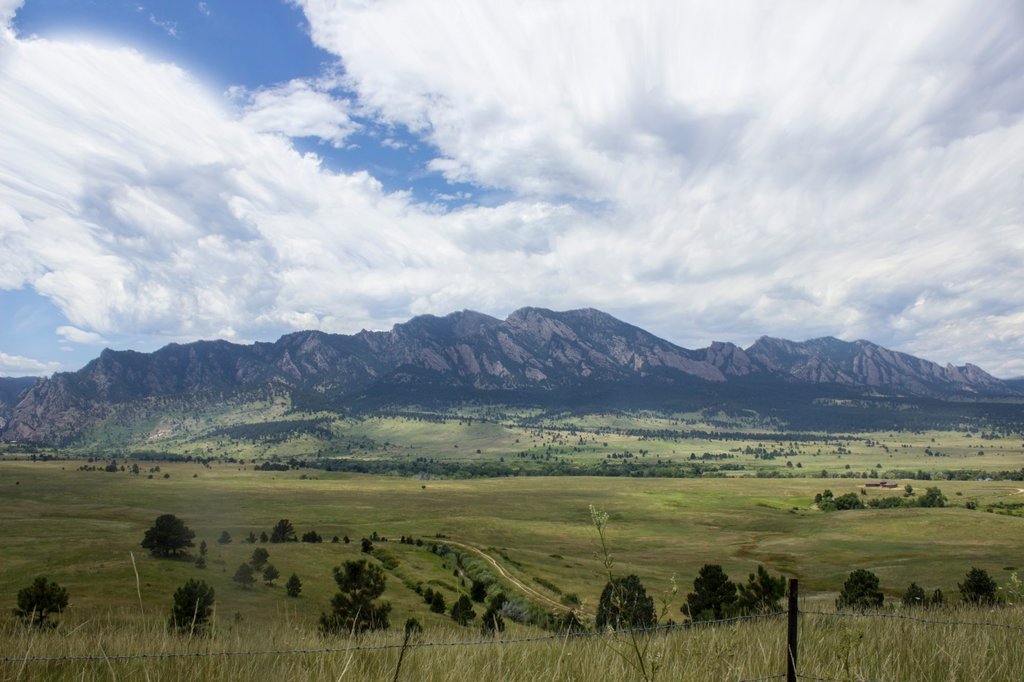
EarthRights and our co-counsel represent the Colorado communities of Boulder County
and the City of Boulder in a soon-to-be precedent setting lawsuit that is currently before the
United States Supreme Court. In 2018, the communities sued Exxon Mobil and Suncor Energy
entities, for their significant responsibility for knowingly contributing to climate change and
for deceiving the public about the dangers of their products. This local effort to protect
Colorado communities has become one of the nation’s most closely watched climate cases—
and one that could shape the future of communities’ ability to seek redress for climate harms
in the United States.
This case seeks to recoup some of the costs these Colorado municipalities must expend
to adapt to and mitigate the substantial impacts of climate harms. Colorado is one of the
fastest-warming states. Rising temperatures have already harmed these communities, and
in the coming years, these injuries will multiply. These local governments expend enormous
effort and resources to address these impacts, while the companies have continued to act
recklessly. This case aims to ensure that the corporations that harmed these communities
pay their fair share, rather than forcing local taxpayers to pay the entire bill.
The EarthRights team has achieved numerous hardfought victories throughout the course
of the case. Most notably, in May of 2025, the Colorado Supreme Court ruled that Boulder
County and the City of Boulder’s case could move forward. Now, the U.S. Supreme Court has
decided to weigh in.
This is the second time an EarthRights case has gone to the Supreme Court. Last time, we
won a landmark ruling that international financial institutions are not absolutely immune
from suit. That victory expanded access to justice for communities harmed by powerful global
actors. Today, we continue the work of fighting against immunity for those whose conduct
has harmed and imposed enormous costs on these Colorado communities.
Similar lawsuits to our Boulder case are currently proceeding across the nation. This was
the first such lawsuit seeking to recover the costs associated with climate change impacts
on behalf of inland mountain communities—or anywhere in the U.S. interior. Like localities
across the country, Boulder County and the City of Boulder face heartrending stakes. Current
climate impacts for the plaintiffs are projected to grow worse over time, including more
extreme heat days, more frequent and destructive wildfires, more frequent and severe
droughts, reduced snowpack, greater risk of flooding, and changing precipitation patterns
that stress agriculture.
These changes will hit at the heart of the local economy, damaging roads, forests, homes,
farms, ski resorts, open spaces, and much more. Adapting to such a wide range of impacts
requires local governments to undertake unprecedented levels of planning and spending.
This lawsuit seeks accountability for that reality. Exxon and Suncor are arguing that federal
law bars Colorado communities from applying state law to their in-state injuries. In its ruling
last year, the Colorado Supreme Court concluded that “federal law did not preempt Boulder’s
claims and that those claims could therefore proceed under state law.” Now, the fossil fuel
companies have asked the U.S. Supreme Court to hold that federal law shields them from
state-level accountability.
The fossil fuel industry has devoted enormous resources to delaying accountability through
years of procedural challenges and appeals, and the defendants have repeatedly attempted
to block the case from ever reaching the merits. Each stage of litigation demands extensive
legal research, coordination, briefing, and oral argument.
Strategic litigation of this scale is never short-term work. It requires sustained funding,
enduring partnerships, and our commitment to pursue justice through years of complex legal
battles against some of the most powerful corporations in the world. Support for EarthRights
makes it possible not only to defend vulnerable communities today, but also to build legal
precedents that can strengthen corporate accountability for years to come.
EarthRights remains committed to standing alongside these communities. The U.S. Supreme
Court decided to review the Colorado Supreme Court’s decision in February of this year. The
case will be argued on October 5, 2026.
“At root, defendants appear to be arguing that a vague
federal interest over interstate pollution, climate
change, and energy policy must preempt Boulder’s
claims. … [But] defendants point to no federal statute
or constitutional text that preempts Boulder’s state law
claims, and ‘[t]here is no federal pre-emption in vacuo,
without a constitutional text or a federal statute to
assert it.’ Puerto Rico Dep’t of Consumer Affs., 485 U.S.
at 503.”
— Colorado Supreme Ct. Op. at 24.
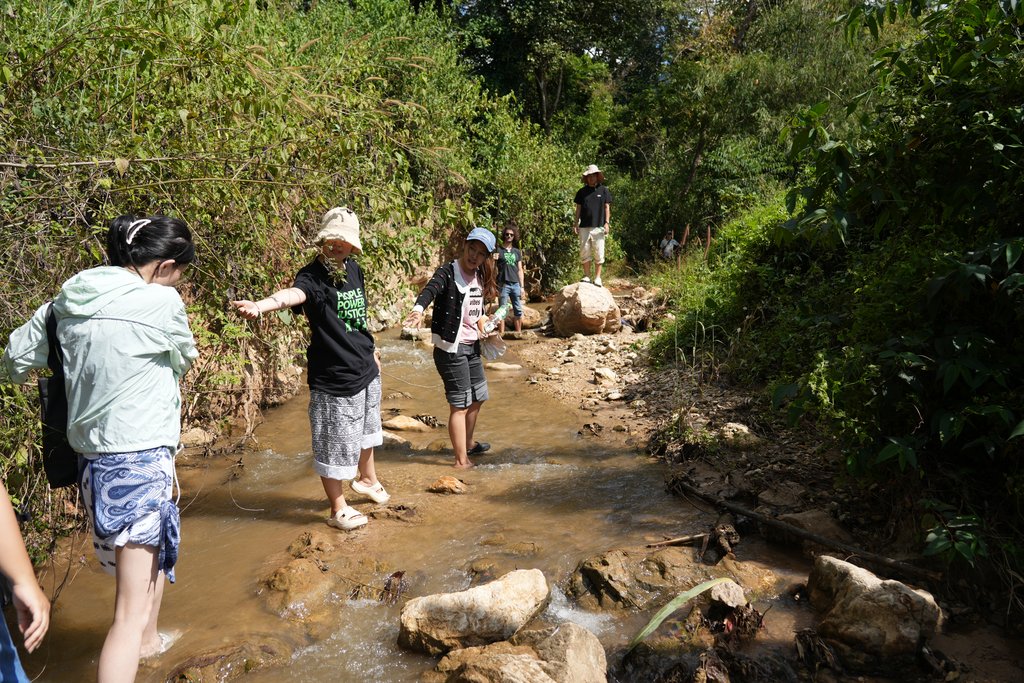
At EarthRights, we train community leaders and provide long-term support for networks that lead movements for lasting change. These leaders and networks form the bedrock of a strong civil society with the power to shape peoples’ development futures, despite shifting political
conditions.
We first launched our education and training initiatives in 1999, with the EarthRights School along the Thai-Myanmar border. The School sharpened the human rights fact-finding and documentation skills of community leaders, who played a critical role in transnational legal strategies and were on the front lines of groundbreaking efforts to secure justice for corporate and state harms. Since then, our training programs have grown significantly in scope and impact.
In 2025 alone, we completed over 20 expert training and knowledge-building programs, which were attended by over 450 defenders, advocates, and community leaders.
Our flagship school and training programs outlined below equip community leaders and advocates with the skills, knowledge, and support systems they need to address human rights abuses, environmental harms, and climate impacts. They harness local power, strengthen transnational solidarity, create pathways for securing justice, and enable lasting, community-centered change.
THE INDIGENOUS LEGAL DEFENSE PROGRAM, LATIN AMERICA
The Indigenous Legal Defense Program engages with environmental defenders from across Latin America, providing them with opportunities to learn new skills and build networks to sustain the defense of ecosystems and communities in the region. The majority of program participants are from Indigenous and Afrodescendant communities.
Participants learn how to conduct effective campaigns, use legal mechanisms to defend their communities’ rights, and incorporate communication strategies into their advocacy work. Participants are lawyers, advocates, and community leaders from diverse backgrounds, education levels, and perspectives.
“Our training program is designed to provide technical and strategic knowledge, skills, confidence, and especially to allow participants to exchange experiences, learn from each other, and create networks to continue their struggle for justice and rights,” said Juliana Bravo Valencia, Latin America Regional Director of EarthRights.
THE EARTHRIGHTS SCHOOL, MEKONG REGION
The EarthRights School offers a unique blend of education in human rights, environmental law, and community advocacy as part of a seven-month residential program at the Mitharsuu Center in Chiang Mai, Thailand. The program combines interactive classroom learning with field research to ensure that students put the tools they are learning immediately into practice.
Participants are from Indigenous and rural communities across the Mekong region and many have experience environmental and human rights abuses firsthand. The program is designed to prepare young leaders from diverse backgrounds to return to their communities with more tools for creating change, and a larger international community to support them.
“The content and learning methods are adapted to the needs of our participants each year, according to the principles of inclusive, non-formal, adult learning. The language of instruction is English, however, we provide language learning support, and resources in the national and local languages of the participants,” said Krisztina Gyory, Senior Training Manager for EarthRights.
THE ALUMNI NETWORK, MEKONG REGION
After participating in EarthRights training programs, alumni from Mekong countries go back to their communities, where they continue to lead defense of the environment and human rights. However, many continue to face risks and obstacles, such as criminalization and security threats.
EarthRights coordinates an alumni network to connect program graduates through a platform for continued learning. The Alumni Network encourages in-country and regional collaboration from graduates from Myanmar, Vietnam, Cambodia, Thailand, and Laos, across a wide range of different ethnic communities and advocacy areas.
Network members receive up-to-date skills training, toolkits, and resources to address challenges they continue to face. Additionally, the network provides practical tools to alumni to navigate the risks they face in their advocacy, including security guidance and mental health support, and fundraising.
THE MEKONG LEGAL ADVOCACY INSTITUTE (MLAI), MEKONG REGION
EarthRights established the MLAI in 2009 to provide a forum for young lawyers and legal
advocates from the Mekong region to share experiences, learn and develop new legal
and advocacy strategies, take effective coordinated action on environmental and social
issues, and find transnational solutions to transboundary environmental problems.
Our annual MLAI workshop is a three-week, in-person, intensive training program that
takes place at the Mitharsuu Center in Chiang Mai, Thailand. Participants learn from
experts about legal tools, mechanisms, and strategies to strengthen recognition of
human and environmental rights in the Mekong region.
Graduates of the MLAI continue to stay engaged through the Mekong Legal Network (MLN). The MLN is an independent group of legal professionals and civil society leaders that meets twice a year to strategize on the use of legal tools to defend human rights and the environment in the Mekong region.
THE CONGO RIVER SCHOOL, DEMOCRATIC REPUBLIC OF THE CONGO
Inspired by the EarthRights School in the Mekong, we launched the Congo River School in partnership with African Resources Watch (AfreWatch) in 2023 to train leaders and activists impacted by damaging mining and development projects across the Democratic Republic of the Congo.
A first training program was held the same year, in which 24 participants learned about legal and advocacy mechanisms they could use to protect their communities from harm. In 2024, EarthRights organized the second and third installments of the Congo River School with the same cohort to build on the knowledge gained in the first training, and build a community of peers.
The curriculum provides participants with practical tools and skills to advocate for their rights and identify community goals and needs. Participants develop action plans that lay the foundation for continued advocacy, education, and accountability efforts within affected communities to ensure sustained positive outcomes from the trainings.
Legal Advances
FRIENDS OF THE EARTH V. EXPORT-IMPORT BANK OF THE UNITED STATES
In July 2025, EarthRights sued the U.S. Export-Import Bank (EXIM) for its approval of a $4.7-billion-dollar loan to subsidize TotalEnergies’ construction of a massive LNG project in Mozambique. After President Trump took office, EXIM rubber-stamped billions of taxpayer funds for a foreign corporation and a project with significant human, environmental, and economic costs without permitting public input, undertaking an economic analysis, and conducting adequate due diligence. The Project took hundreds of people’s land and homes, preventing them from farming, and blocking fisherfolk’s access to the sea. The Project will likely exacerbate the conflict that has engulfed the province where it is located, and security forces guarding the project have reportedly committed war crimes. The Project will also contribute to the climate crisis, and have grave environmental impacts. EarthRights represents Justiça Ambiental and Friends of the Earth U.S., non-profits that work with impacted communities. We asked the court to issue a preliminary injunction preventing EXIM from disbursing funds and declare that approval null and void. After the district court denied our motion, we appealed to the D.C. Circuit, and are awaiting a decision.
AFTER NEARLY FIVE YEARS OF FACING CRIMINALIZATION, URINSAYA DEFENDERS WERE FOUND NOT GUILTY
In October 2025, the courts recognized the innocence of 10 environmental defenders from the Urinsaya rural community (Cusco, Peru), who had been unjustly accused of kidnapping after participating in a peaceful protest in January 2020. They protested against the pollution caused by the daily commute of hundreds of trucks from the MMG Las Bambas mining company through their territory. The Prosecutor’s Office is seeking up to 20 years in prison for the defenders on these charges. While this ruling sets an important legal precedent for environmental defenders in Peru, it also highlights the criminalization of those who protect their communities’ well-being and collective rights against corporate abuses in Peru.
THAILAND’S SUPREME COURT GRANTS VICTORY FOR INDIGENOUS COMMUNITIES
In February 2026, the Chiang Mai Administrative Court issued an order granting temporary injunctions to protect the local area from a proposed coal mining project in Omkoi. This decision marks a significant victory for the Omkoi communities and activists who have long campaigned against the mine. “This is our victory. It is such a relief waiting for this decision,” said an activist from Omkoi.
EarthRights partnered with the Omkoi communities and the Omkoi Monitoring Group to oppose the project, which threatens to destroy river resources and cause significant air and heavy metal pollution. In 2022, the communities filed a lawsuit against the relevant Thai agency to demand the revocation of the project’s Environmental Impact Assessment (EIA) approval.
Due to fundamental flaws in the EIA and its lack of environmental and social impacts, the communities also submitted a complaint to the United Nations Special Rapporteur on the Right to Health in February 2025. EarthRights assisted in drafting this communication, which highlighted the environmental and human rights violations associated with the mining project.
Through community organizing, public advocacy, litigation, and evidence-based documentation, EarthRights continues to support the Omkoi people in asserting their Indigenous rights and their right to a clean and healthy environment. We demand the Thai Government to stop the project and continue to protect the. Omkoi communities from harmful coal mining.
DOE V. CHIQUITA BRANDS INTERNATIONAL
In 2025, the fight continued. This year saw significant advances in the defense of the 2024 jury verdict finding Chiquita Brands liable for the deaths of eight Colombian nationals stemming from its systematic financing of the United Self-Defense Forces of Colombia (AUC), a brutal paramilitary death squad. The verdict marked the first time a U.S. jury held a corporation responsible for its human rights abuses abroad.
In 2024, Chiquita appealed the verdict to the Eleventh Circuit court of appeals, seeking to undo the jury’s decision. In the year after the culmination of the trial, the parties presented their arguments to the court. Appellate arguments concluded in early 2026 when the court held an oral argument. The oral argument is an important step toward a decision that will inform the path forward for the families of the eight victims and the hundreds of families that await their day in court. The case now rests in the hands of the Eleventh Circuit as we await a decision.
Nineteen years after the initial filing of their claims, our clients remain steadfast in their commitment to hold the banana giant accountable and believe justice will prevail.
Our 30th Anniversary
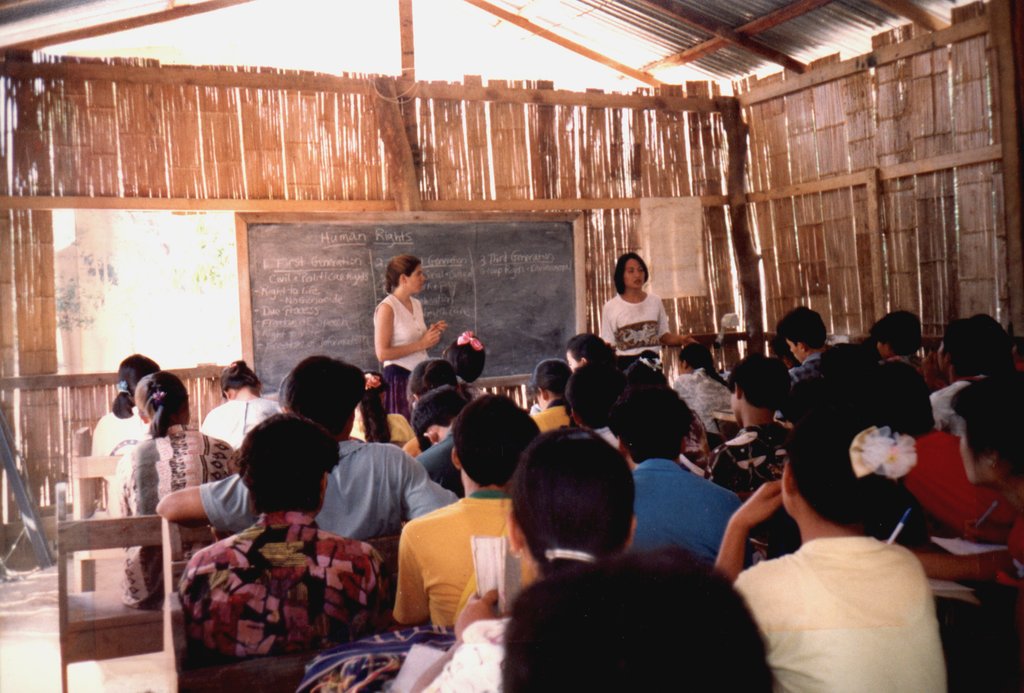
AN EARTHRIGHTS INTERNATIONAL ANNIVERSARY REFLECTION
By Ayden Makar, Development Associate
From the start, it was clear EarthRights is an organization like no other. Community is baked into every facet of the organization, and you feel the love and care built into its stewardship at every interaction. I remember feeling it during my hiring process and immediately telling my parents “I have to work there.” A few weeks later, I walked into the EarthRights office for the first time.
For over 30 years, EarthRights has focused community at its core. Whether it’s setting a global precedent with Doe v Unocal, one of the first cases of its kind to hold a corporation accountable in U.S. courts for human rights abuses abroad, or winning before the Supreme Court and ending absolute immunity for international finance institutions, or even training over 700+ environmental and human rights activists and lawyers, EarthRights is trailblazing on building and defending communities.
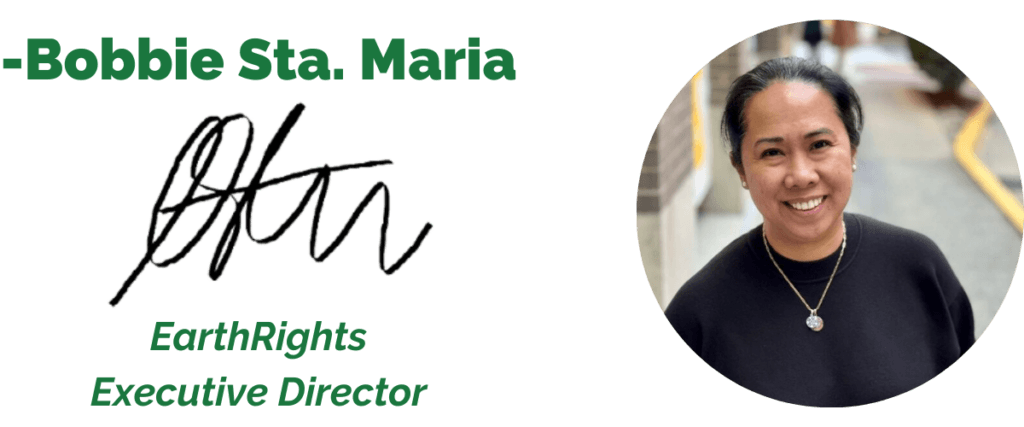
This past year, I had the opportunity to celebrate our 30th anniversary with EarthRights supporters, staff, alumni, and partners around the world.
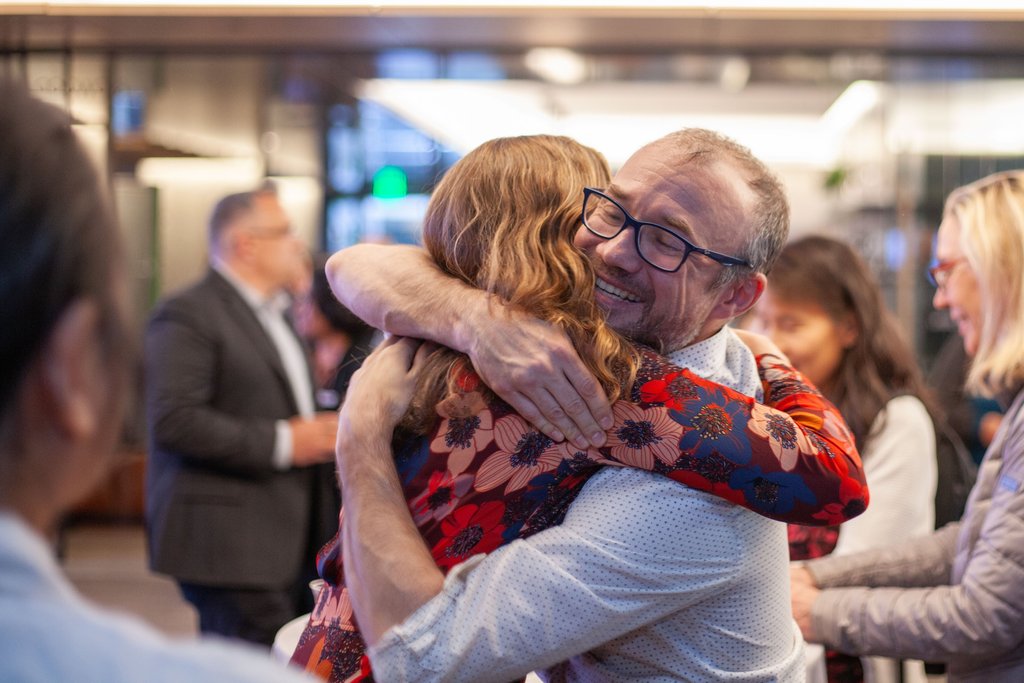
In San Francisco, I saw how staff members greeted funders, supporters, board members, and peer organizations like old friends. All three co-founders – Katie Redford, Ka Hsaw Wa, and Tyler Giannini gathered for the first time in years, seemingly picking right up from where they had left off. Staff and guests from across the movement shared ideas, jokes, and stories, excitedly looking to the future while honoring the past.
During the celebration, I watched longtime EarthRights training alumni and friends embrace one another, reminisce about EarthRights memories over tea leaf salad, and dance and sing along with the music as little kids ran around the Mitharsuu Center grounds.
This was not just an anniversary party, this was a celebration of over 30 years of community. Without EarthRights, it’s likely many of their paths would not have crossed, yet here they were, laughing over stories and sharing updates on their work, still learning from each other.
An organization that started as three people has grown into a community of hundreds built on change. Over the course of three decades, EarthRights has harnessed the power of people to not just advocate for justice, but to achieve it. In a time where corporate abuse is emboldened, where environmental and human rights protections are under attack, EarthRights’ work serves as a model, reminding us that it is through community that we find our strength.
Join the fight to achieve climate justice, protect defenders, and demand corporate accountability.
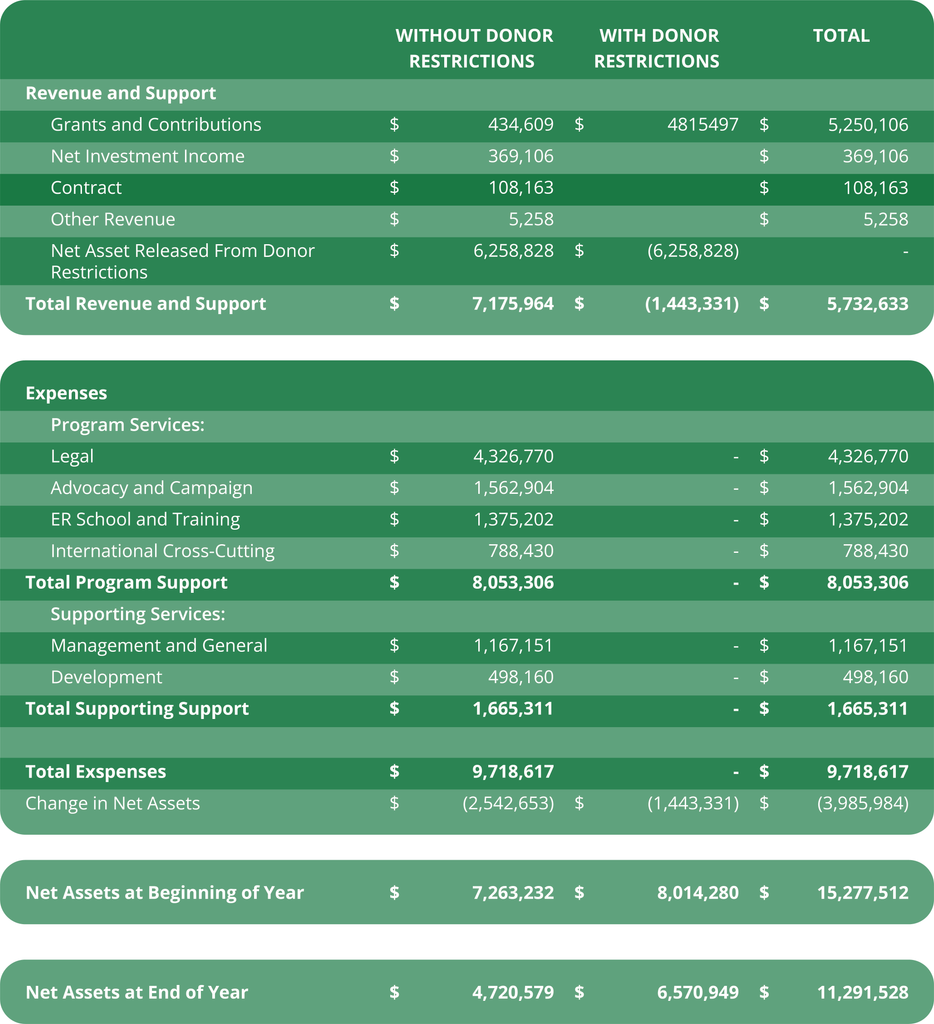
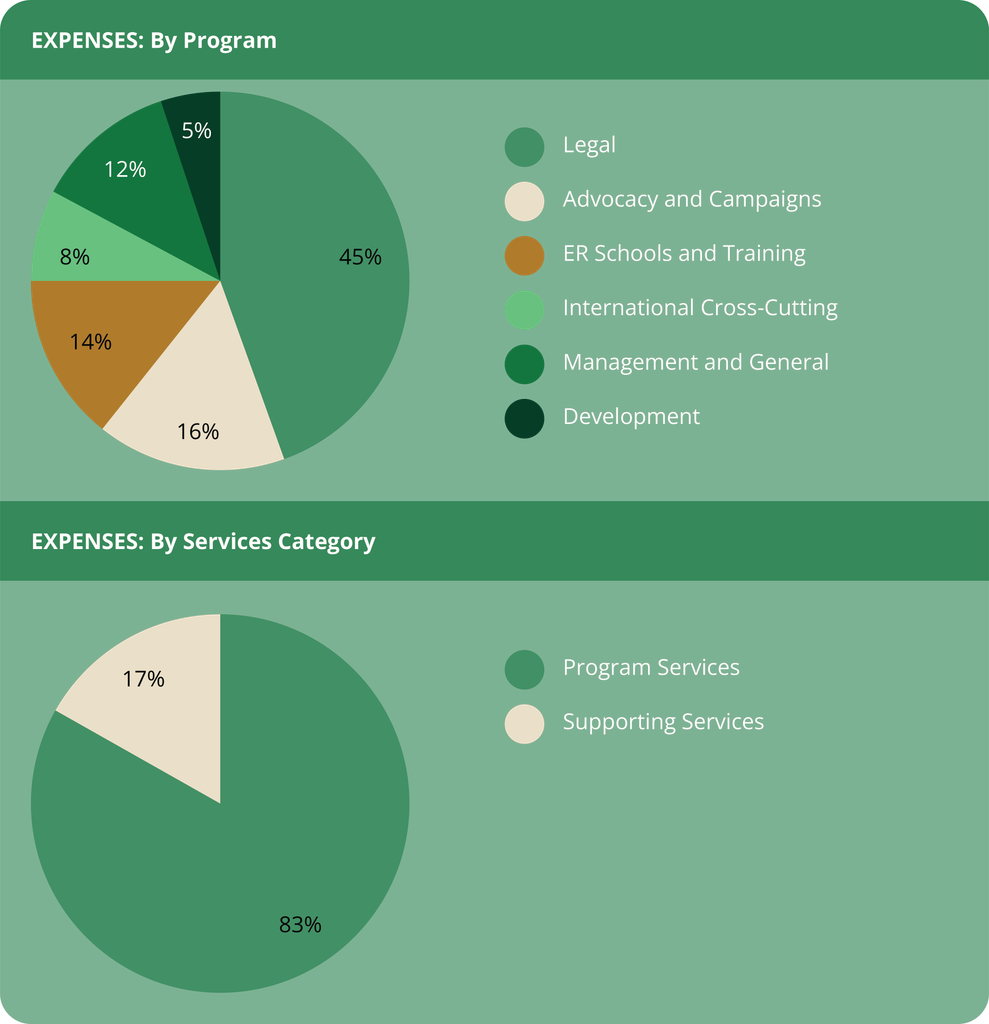
Financials
Board of Directors
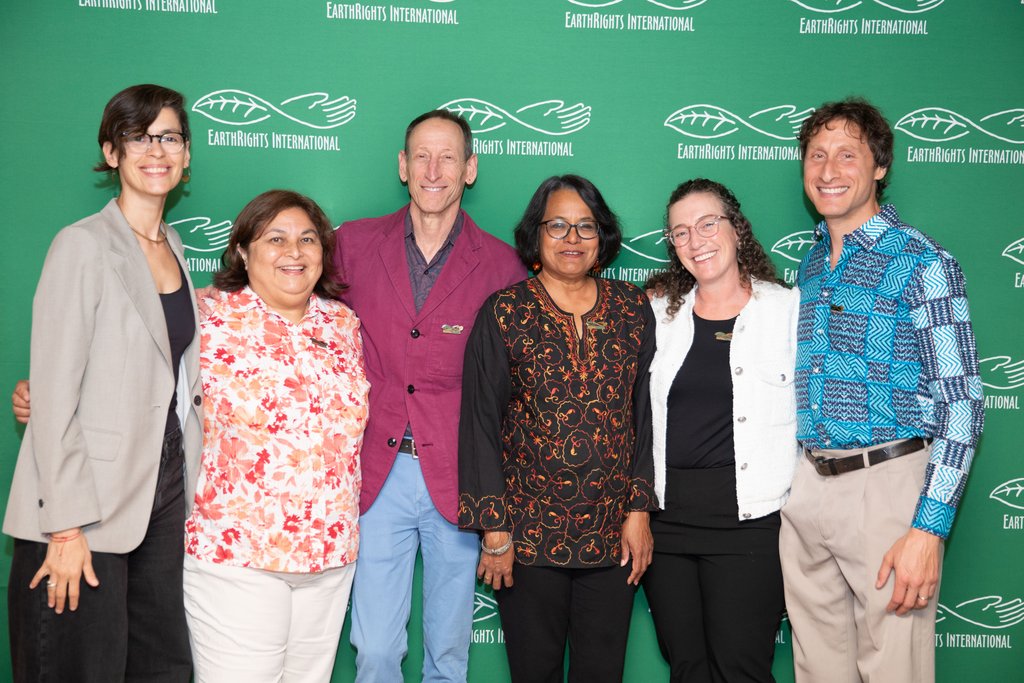
Fernanda Hopenhay, Co-Chair
Graciela M. Mercedes (Meche) Lu, Co-Chair
Dan Gerard, Treasurer
Kristin Casper
Rachel Gore-Freed
Jonathan Kaufman
Solinn Lim
Tom Weerachat