The landmark lawsuit that led to a historic settlement agreement in favor of Honduran farmers
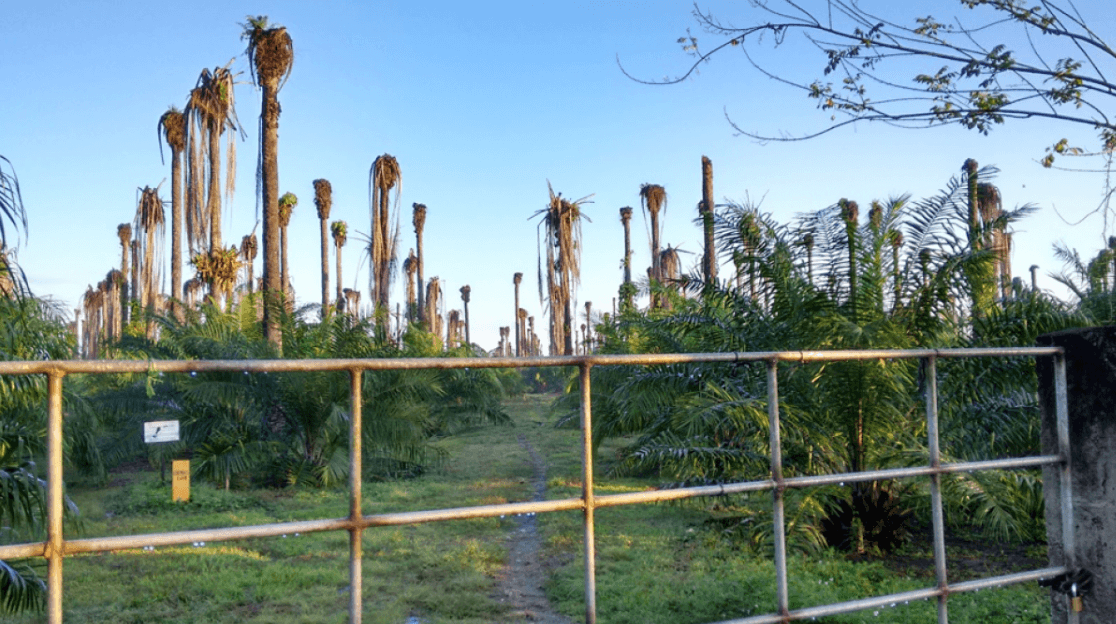
In 2024, families in the Bajo Aguán Valley of Honduras reached a multi-million dollar class action settlement agreement with the World Bank’s private lending arm, the International Finance Corporation (IFC). This is the first time any international finance institution (IFI) has agreed to provide a remedy to end a lawsuit brought by an injured community. The settlement, administered by EarthRights, will fund community support interventions selected by plaintiffs and class members. Specific settlement projects may include programs in health, nutrition, education, small business support, family wellness, housing, environmental protection, care for the elderly, and legal aid. The settlement is a result of a landmark lawsuit led by EarthRights against the IFC for financing the notorious Honduran palm-oil company, Corporación Dinant, which was linked to years of alleged violence, land grabbing and dozens of murders in the Bajo Aguán region.
| “We, the families of the victims, are satisfied with the agreement. From the bottom of our hearts, we hope that armed violence will cease to be a tool in the areas around the world, where the institutions financed by the IFC defendants operate, so that this story of blood, death and pain will not be repeated” Survivor of violence in the Bajo Aguán |
EarthRights filed the case on behalf of Honduran farmers against the IFC in federal court in 2017. The plaintiffs accused the IFC of violating its own safety policies by providing loans to Dinant despite knowing that the company was engaging in violent land grabbing and human rights abuses against local communities (or despite numerous allegations of violence that they should have known).
Why it matters
Over 100 farmers have been killed in the Bajo Aguán since November 2009 when the IFC disbursed the first half of a $30 million loan to Dinant. At the time the loan was issued, there were widespread allegations that Miguel Facussé, the owner of Dinant, employed hitmen, military forces, and private security guards to intimidate and kill local farmers in the Bajo Aguán who had contested Facussé’s claims to the land. An internal investigation by the World Bank’s internal watchdog, the Office of the Compliance Advisor/Ombudsman (CAO), concluded that the IFC failed to adhere to its own policies meant to protect communities; either it knew about the serious social, political and human rights risks of the investment and failed to act effectively on that information, or it failed to conduct the necessary due diligence to identify such risks in the first place; and failed to disclose vital project information, consult with local communities, or classify the project as a high-risk investment. Allegations from civil society analyzed by the CAO linked at least 40 killings to “Dinant properties, Dinant security guards or its third party security contractors”. While farmer organizations in the Bajo Aguán region and other NGOs and lawyers have made efforts to hold Dinant, the State of Honduras and IFC accountable, attacks and killings continue today.
This case demonstrates that when IFIs fail to remedy the harms to which they have contributed, communities will not hesitate to bring them to court. The IFC and other financial institutions should take this lesson to heart, and both improve their steps to avoid contributing to such harms in the first place, and develop remedy policies that ensure real accountability when they still do.
| “No community has ever successfully sued an international financial institution before. This is a monumental step for communities seeking accountability.” David Hunter, American University Law Professor |
Holding International Financing Institutions Accountable for Harms: Why it Matters
| Gujarat, India[small map icon or picture here] Why it Matters: The 4,000 MW Tata Mundra Ultra Mega Power project in Gujarat, India has significantly harmed the local marine ecology, air quality, and community livelihoods. EarthRights represented fisherfolk, farmers and a village in a lawsuit against the IFC which led to a groundbreaking ruling in 2019 by the U.S. Supreme Court which denied the IFC absolute immunity from lawsuits in U.S. courts. To learn more about how a fishing community took on the World Bank check out this link. |
All too often IFIs have financed development projects without properly consulting communities and ensuring due diligence. This has resulted in harm and has failed to deliver benefits to people locally.
Despite massive evidence of harm and violence and complaints filed to independent accountability mechanisms (IAMs) within IFIs, data in 2026 from the Accountability Console shows that only 7% of complaints filed to these IAMs were met with remedial action. Numerous longstanding cases have yet to see concrete remedies for the communities despite years of engagement with IAMs.
Read: It’s Time to Stop Weaponizing “Risk” to Resist Reform
Our support for the Bajo Aguán Farmer Communities
EarthRights filed a class action lawsuit, Juana Doe v. International Finance Corporation in a U.S. federal court against the IFC in 2017, representing 13 plaintiffs and two classes of community members that suffered violence. The plaintiffs alleged that armed agents of Dinant terrorized the local communities to expand its profitable palm oil operations and that the IFC, which financed Dinant, knew or should have known about the attacks and murder. EarthRights and co-counsel led the legal efforts to push the case forward in the face of the IFC’s efforts to have the case dismissed. In 2013, the parties reached agreement on the terms of a class settlement, which was ultimately approved by the U.S. federal court in Delaware in 2024 after an extensive class notice process. EarthRights now serves as the administrator of the settlement fund, overseeing the process to implement the settlement to bring maximum benefits to the affected communities.