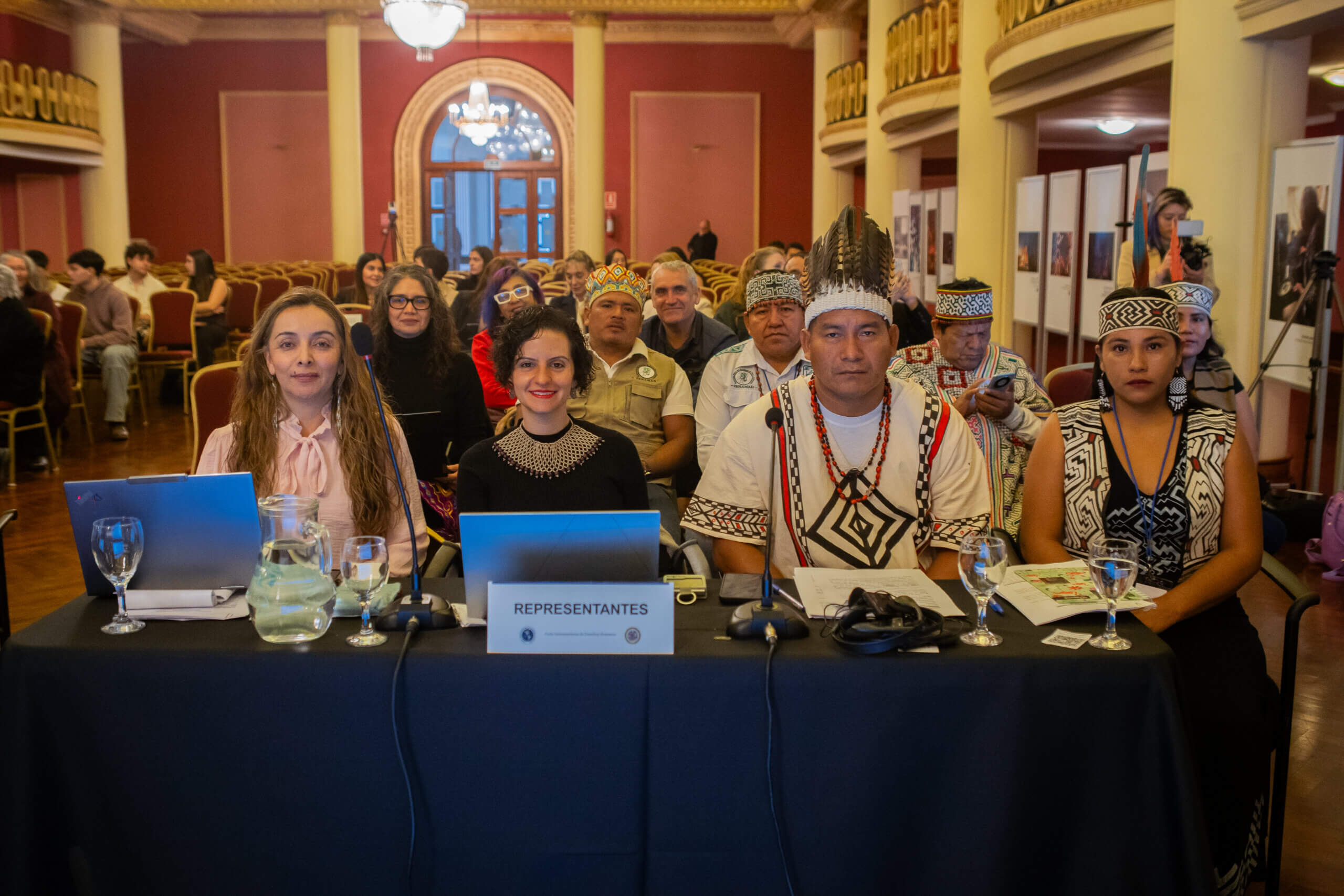
- The Native Federation of the Madre de Dios River and Tributaries (FENAMAD) and EarthRights International presented evidence before the Inter-American Court of Human Rights (IACtHR) showing that extractive activities in the ancestral territory of the Mashco Piro Indigenous people, who live in voluntary isolation, are incompatible with the protection of their lives.
Montevideo, September 25, 2026 – The public hearing before the Inter-American Court of Human Rights (IACtHR) in the case of the Mashco Piro Indigenous People v. Peru has concluded. During the sessions, organizations representing the plaintiffs detailed how the Peruvian government has failed to fulfill its obligation to guarantee the principle of non-contact and the integrity of the ancestral territory of the Mashco Piro Indigenous people living in isolation. The organizations pointed out that Peru has allowed extractive activities and incursion by third parties into this territory, exacerbating the conditions that threaten their existence.
They also recalled the evidence presented since 1999 by FENAMAD to the Peruvian government regarding the presence of the Mashco Piro people in the areas that were later designated for logging. Despite this evidence, the government established the Madre de Dios Territorial Reserve in 2002 in a fragmented manner, recognizing only 34% of the area identified as the territory of isolated Indigenous peoples.
“This lack of state protection has allowed various economic activities to take place within the Madre de Dios Territorial Reserve that impact the Indigenous peoples in question, including logging, mining, and infrastructure projects that have received state concessions and endorsements, as well as illegal logging,” said the Inter-American Commission on Human Rights.
The former president of FENAMAD, Julio Cusurichi, maintained that for 25 years, the checkpoints and monitoring stations for the protection of their isolated brothers and sisters have been maintained by FENAMAD, the Yine Nation, and the peoples who share the Mashco Piro territory. “Well, we’ve come here because this is the only hope that our Indigenous brothers and sisters living in isolation will remain alive,” he said during the public hearing.
For more than two decades, FENAMAD has been implementing patrol strategies and early-warning systems to uphold the principle of non-contact and prevent the risk of hostile encounters. “Today, we reaffirm that the territory of the Mashco Piro people must be respected as an inviolable space, guaranteeing their right to self-determination and to live according to their own ways of life. We need a government that is present, that fulfills its obligation to protect these territories, and that works hand in hand with the communities to safeguard the lives and peaceful coexistence of all the peoples who share this ancestral territory,” said Alfredo Vargas Pio, president of FENAMAD.
Should economic interests prevail even when the lives and survival of Indigenous peoples living in voluntary isolation are at risk?
For peoples in isolation, their territory is not merely a physical space, but an indispensable resource for subsistence and survival.
“Territory means everything—it holds our memory, our customs, our identity, and our culture. Water means life; the land provides us with the vital resources we need to survive,” stated FENAMAD Vice President Eusebio Ríos Viche.
International law expert witness Mikel Berraondo categorically stated that business operations, forestry concessions, and extractive activities in the ancestral territory of Indigenous peoples living in voluntary isolation or in adjacent areas are absolutely incompatible with their protection.
“Non-contact is intrinsically linked to territory, since ultimately the Mashco Piro people need a territory where they can live, maintain their isolation, and go about their lives without threats or problems,” stated Berraondo.
“This government logic of trying to reconcile the lives of these peoples with economic projects and interests violates international standards regarding the protection of Indigenous peoples in isolation by favoring the approval of extractive projects,” said Juliana Bravo, director of EarthRights’ Latin America office and an attorney for the case.
“The current government’s request for legislative authority—which seeks to relax and weaken regulations to allow for the expedited approval of projects in protected natural areas and Indigenous reserves—threatens the territory of the Mashco Piro,” added Bravo.
Protecting the Mashco Piro people means recognizing that there are Indigenous territories and peoples whose rights require special protective measures, as they are being severely affected by the environmental devastation of the Amazon, which is putting their very existence at risk. Protecting their territory is essential not only for their survival but also for safeguarding the ecological integrity of the world’s most biodiverse ecosystems.
Petitions to the Inter-American Court of Human Rights
In accordance with international standards and principles regarding the protection of the rights of Indigenous Peoples Living in Isolation and Initial Contact (PIACI), the plaintiffs’ legal representatives requested that the Inter-American Court of Human Rights:
- Protect the ancestral territory of the Mashco Piro people, where other Indigenous peoples also live, ensuring its integrity and the principle of non-contact.
- Complete the process of reclassifying the Madre de Dios Territorial Reserve as an Indigenous Reserve, which began in 2014.
- Establish protective perimeters around the area designated as Mashco Piro territory to effectively guarantee the principle of non-contact, the right to health, peaceful coexistence, and the well-being of the Indigenous peoples who share these territories.
- Recognize and adopt the community-based protection system for isolated peoples implemented by FENAMAD and its communities, and coordinate its implementation with the organization.
- Cancel all large-scale extractive projects, at any stage, within the territory of ancestral occupation of the Mashco Piro people.
###
Broadcast of the hearing on September 24
Broadcast of the hearing on September 25
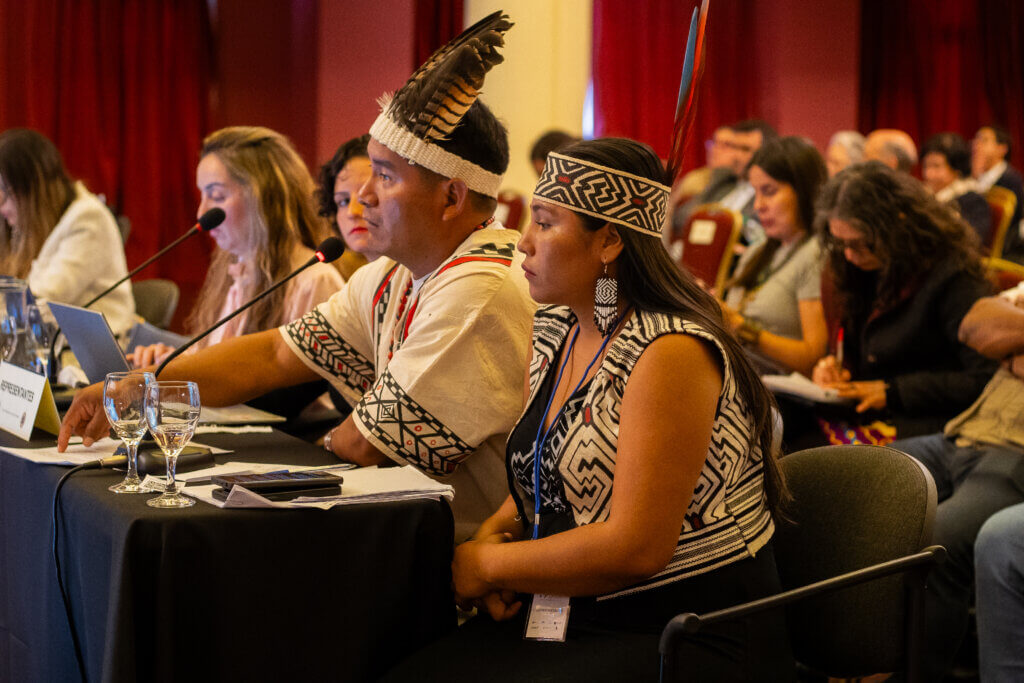
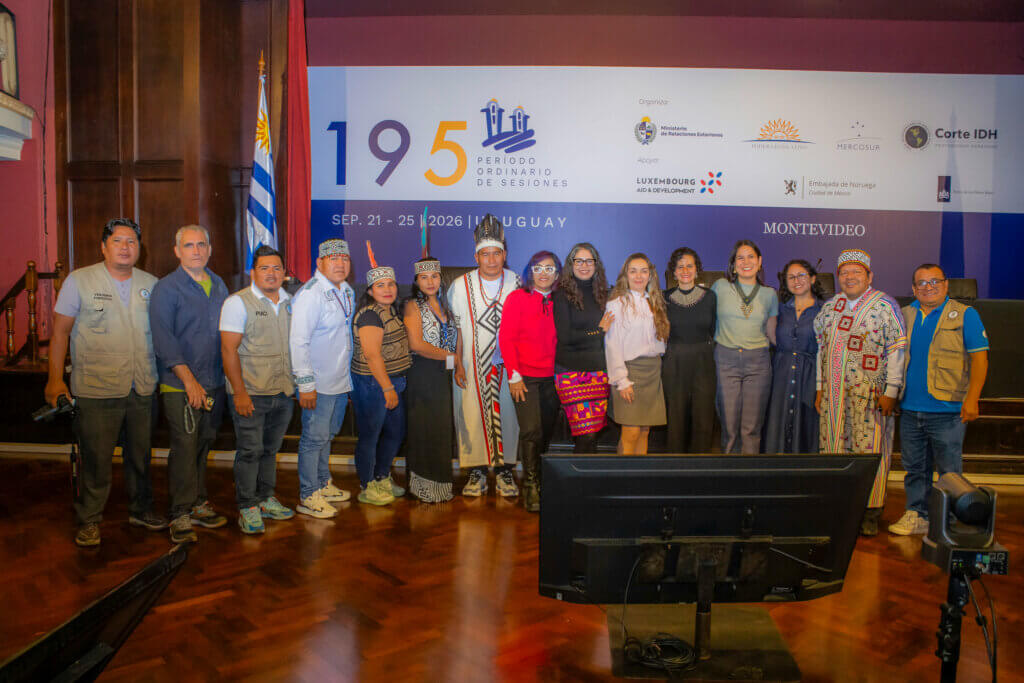
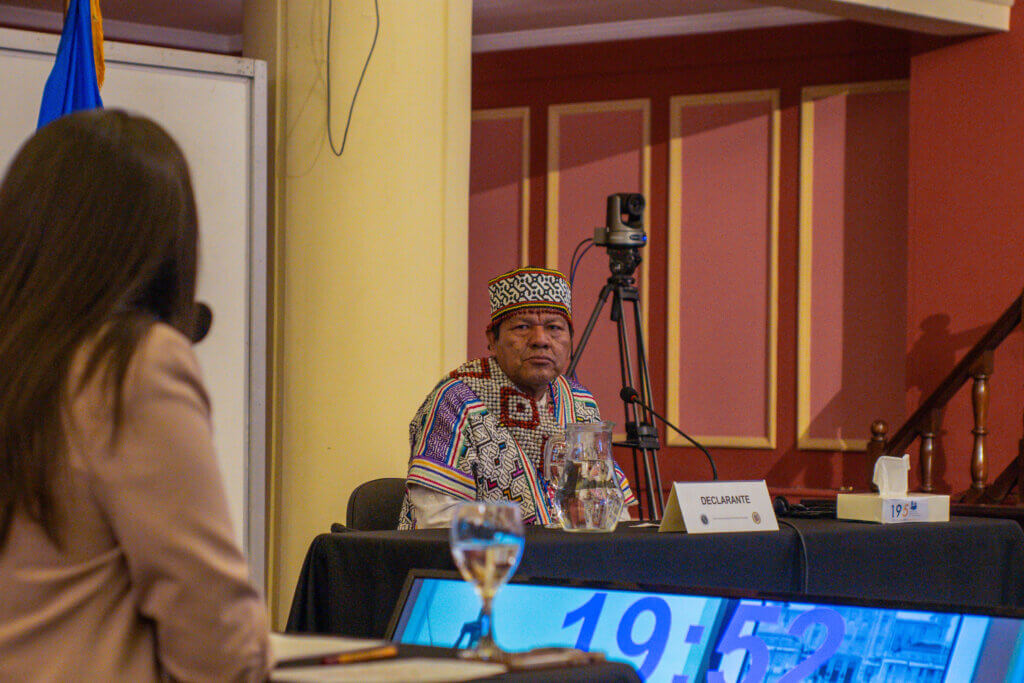
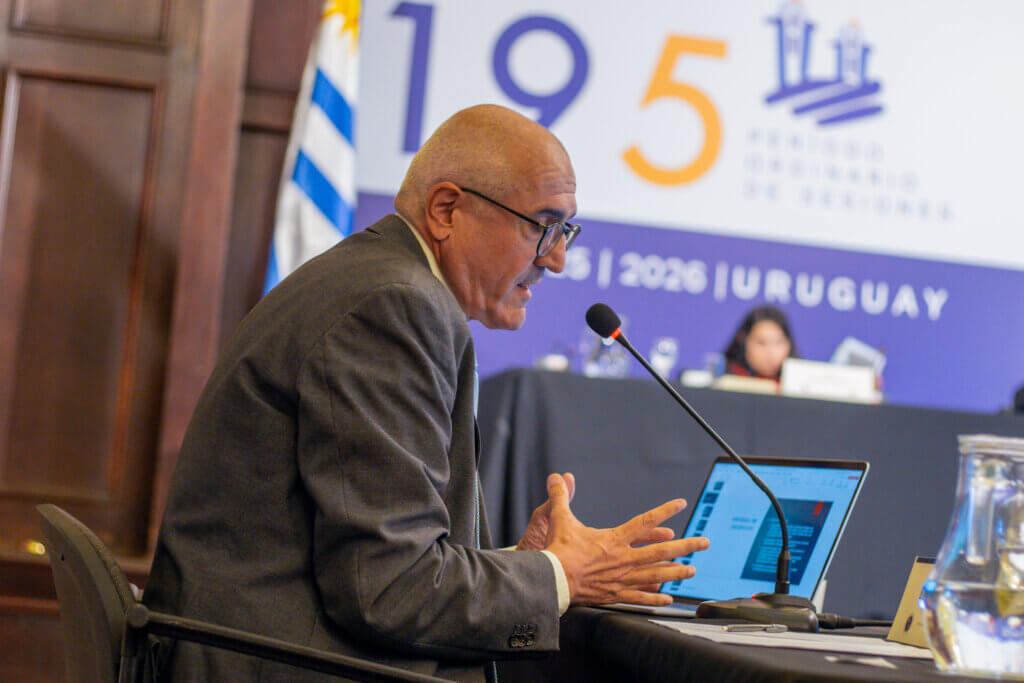
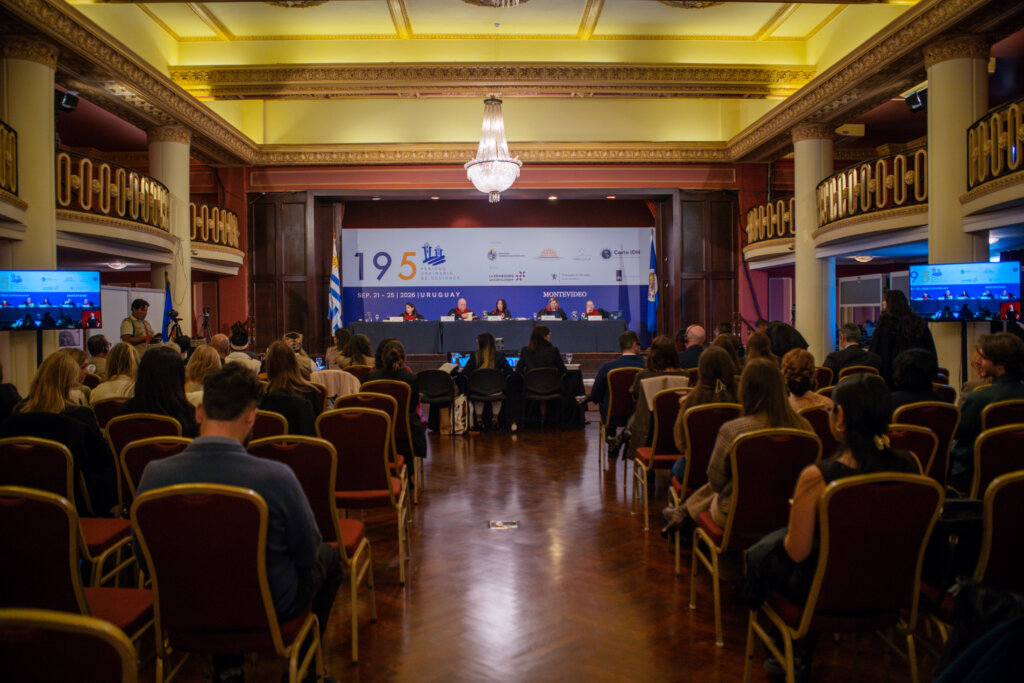
Photos from the IACtHR hearing:
Media Contacts:
María Paula Riveros Forero
Communications Manager, EarthRights International Latin America Office
maria.paula@earthrights.org
Cell (+57) 3118548763
Daniel Khennyi Peña Pérez
Communications Coordinator, FENAMAD
khennda@gmail.com
Cell (+51) 910395282
About FENAMAD
The Native Federation of the Madre de Dios River and Tributaries (FENAMAD) is an Indigenous organization in the Peruvian Amazon that represents the region’s peoples and has been defending their territorial and cultural rights for more than four decades.
About EarthRights International (ERI)
EarthRights is an international nonprofit organization that, since 1995, has combined the power of the law with the power of the people to defend human rights and the environment. In Latin America, ERI works alongside Indigenous communities to confront abuses committed by corporations and governments, pursuing strategic litigation to strengthen the communities’ resilience.