
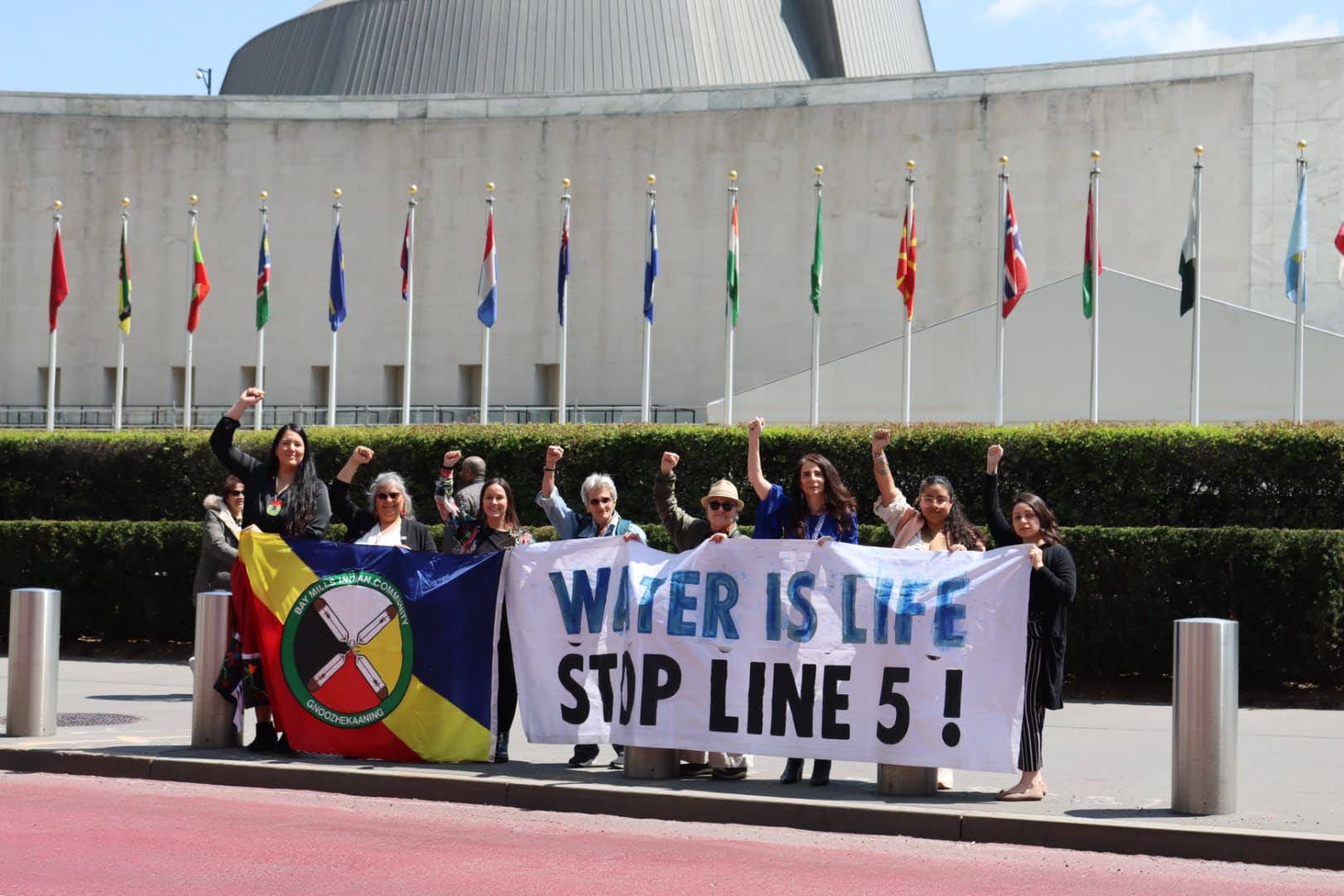
A win for the Stop Line 5 movement
“Enbridge cannot use the promise of a tunnel to justify putting our most precious resources
at risk by pumping oil through the Great Lakes for another decade…Michigan has waited long enough.” This quote isn’t from Stop Line 5 activists. It’s from a letter that Michigan Governor Gretchen Whitmer just sent to the CEO of Enbridge, the Canadian fossil fuel company that is trying to replace and reroute a risky pipeline through Wisconsin and Michigan.
On the heels of a critical Michigan Supreme Court decision that overturned a Michigan Public Service Commission permit, Governor Whitmer sent a letter to Enbridge calling on the corporation to pull the Line 5 pipeline out of the Straits of Mackinaw, the body of water that connects two of the Great Lakes, and shut it down. The choice, she says, is not between the existing pipeline and the tunnel, but between continuing to risk catastrophe in the Great Lakes and the corporation’s profits. In addition to this letter, Michigan’s Department of Environment, Great Lakes, and Energy announced last week that it will re-evaluate a separate permit granted in July to the company. This is a historic win for the Stop Line 5 movement.
What Is Line 5?
Line 5 is Canadian company Enbridge’s 73-year-old oil and gas pipeline. With a lifespan of 50 years, the pipeline is now 23 years over its lifespan, and risks spilling into the 400 bodies of water, including the Great Lakes. Enbridge has proposed replacing the pipeline with a new one, and continuing to route it through the Great Lakes through a tunnel. Indigenous Tribes in the Great Lakes region have challenged the location of the pipeline as well as the safety of building a tunnel in the Straits and continuing to operate. In 2021, the state ordered Enbridge to shut down the 73-year-old pipeline, though the company defied those orders and continued to operate, stating that only the federal government had the authority to shut it down.
Indigenous Stewardship Leads The Way
Governor Whitmer’s action is a significant development, and one we should credit to the Indigenous leaders, community activists, and their allies who have carried the Stop Line 5 movement forward. At times when Michigan’s political leadership has waivered, the movement has continued to hold feet to fire, ensuring that any decision that would allow this pipeline to continue to exist would be met with swift rebuke.
Governor Whitmer echoed the concerns of the community in her letter, specifically highlighting the ongoing risk that Line 5 poses to the health and wellbeing of the environment. This is especially relevant, as just weeks ago, Line 5 reportedly spilled 1.3 million gallons of liquid gas in Wisconsin, the largest reported oil and gas spill in state history.
The Time Is Now
The Stop Line 5 movement in the Great Lakes region celebrated this letter and subsequent action of the state of Michigan to review a key tunnel permit that is required for Line 5 to continue operating. But, the work is far from over.
The people continue to pressure the state governments to use the power they already have to stop Line 5. Just days after Governor Whitmer sent the letter to Enbridge, four Tribes in Michigan petitioned state regulators to overturn the permits that they are reviewing, and that if authorized, would allow the Line 5 tunnel to be built in the Straits. The Tribes are not stopping to admire the win for too long, and we should follow their lead.
Here are some steps that organizers in the movement are calling on the governments in Wisconsin and Michigan to take:
- Revoke and terminate permits for the Line 5 project
- Ensure that the National Transportation Safety Board is involved in overseeing Enbridge’s safety protocols, and that there are independent investigations into the site conditions and safety protocols
- Ensure that state agencies are actively managing independent air, water, and groundwater monitoring, and not solely reliant on data provided by Enbridge
Getting the Michigan government to send this letter in the first place is the result of a herculean effort by the Stop Line 5 movement, which has applied pressure at all levels of government, monitored construction, researched the alternatives, organized communities, and continued the fight. In the current political environment, it’s important to celebrate when local communities prevail over the interests of powerful corporations.