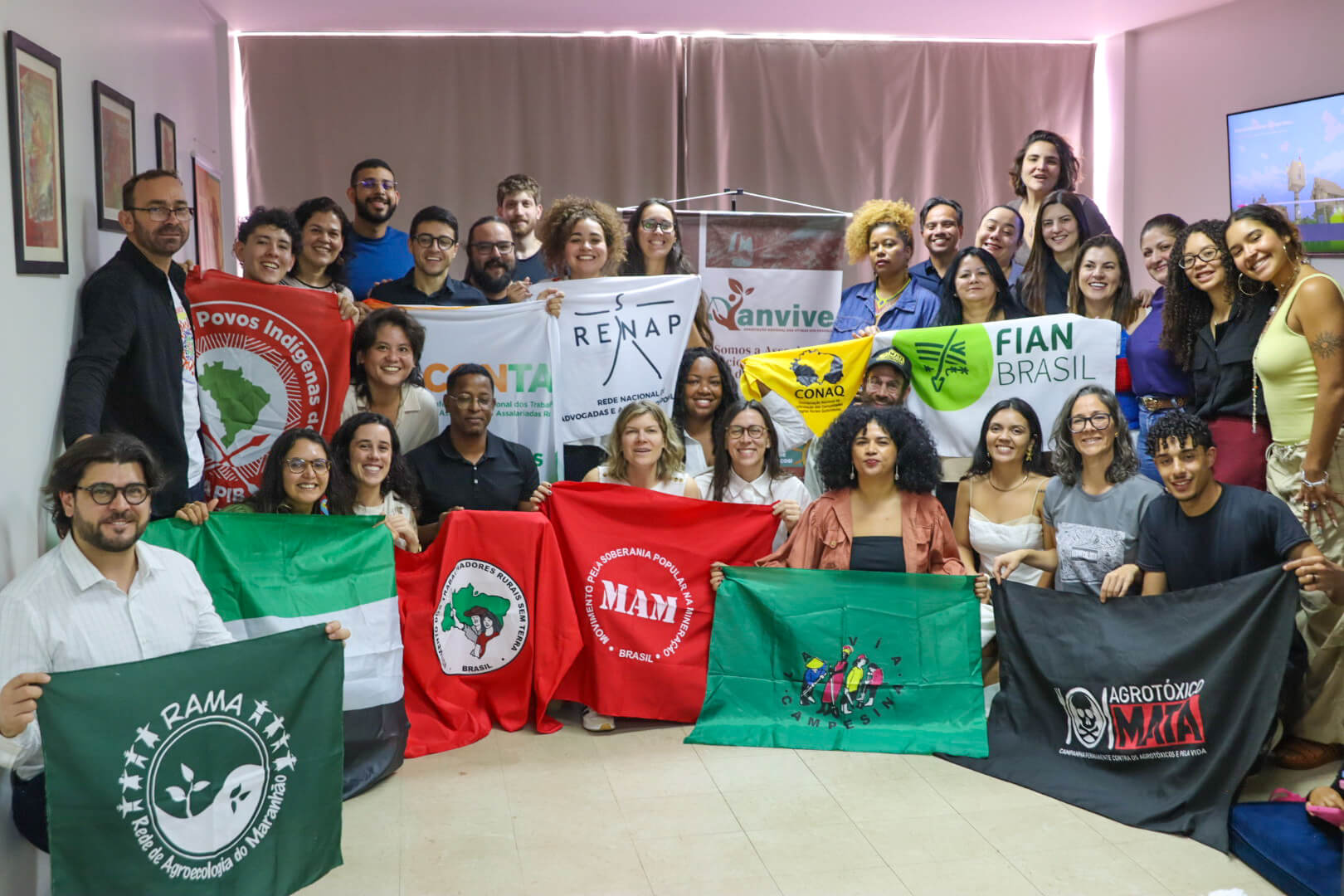
- EarthRights led a session on transnational corporate accountability at the fourth annual convening of the Permanent Campaign Against Pesticides’ legal collective in Brazil.
- Brazil’s pesticide crisis is severe and worsening: it’s the world’s top pesticide consumer, pesticide-related conflicts surged 763% in 2024 alone, and Indigenous, Quilombola and peasant communities bear the brunt of the crisis.
- This work is part of EarthRights’ broader commitment to strengthening corporate accountability globally, in partnership with movements and communities on the frontlines of environmental and human rights struggles.
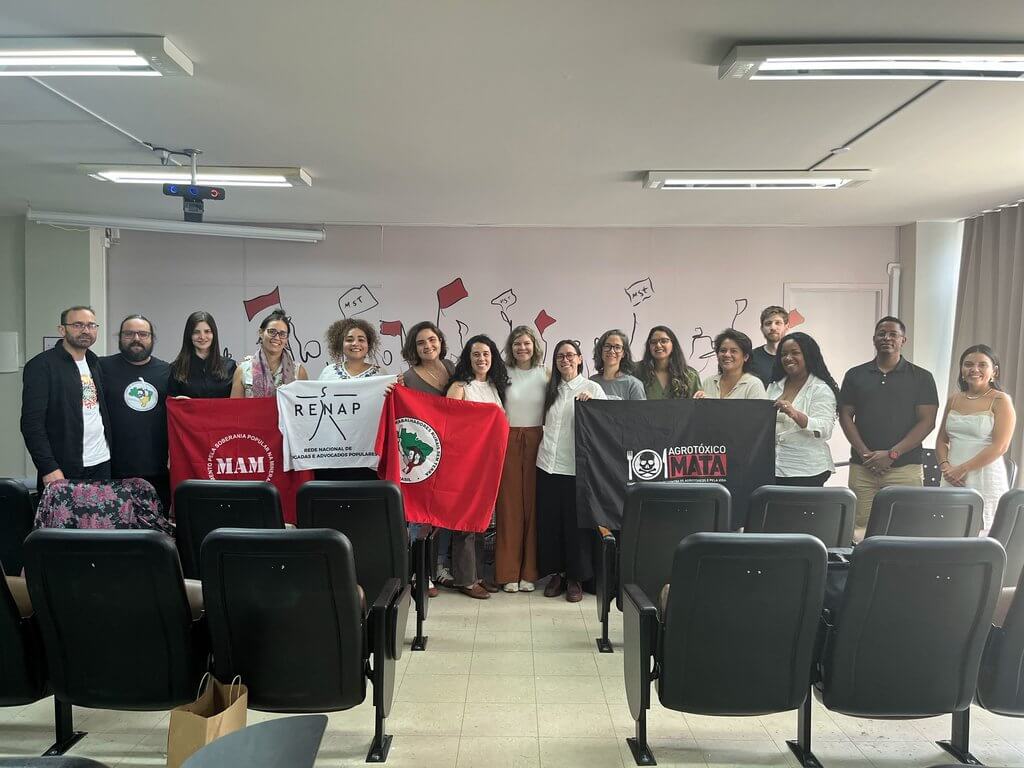
This July, EarthRights joined the fourth annual convening of the Zé Maria do Tomé Legal Collective (Coletivo Jurídico Zé Maria do Tomé) in Brasília, bringing our experience in transnational corporate accountability to a room of nearly 35 representatives from more than 20 Brazilian organizations – peasant, Indigenous, Quilombola, and community groups, alongside civil society organizations, social movements, labor unions, and universities –, all working to confront the country’s escalating pesticide contamination crisis.
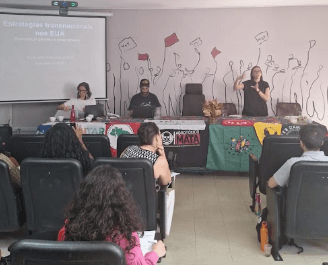
At the convening, EarthRights led a session on transnational corporate accountability frameworks, drawing on our decades of work representing communities harmed by transnational corporations, international financial institutions, and opaque global supply chains. Our goal was not simply to share legal tools, but to build solidarity – and to think together about how international support can reinforce, rather than overshadow, Brazilian-led struggles.
Why this work matters
Brazil is the world’s largest consumer of agrotoxins such as pesticides and herbicides. A 2020 study found 27 pesticides in the drinking water of 1 in 4 Brazilian municipalities – 16 of those pesticides are classified as extremely or highly toxic, and 11 are associated with chronic diseases including cancer, fetal malformations, and hormonal and reproductive dysfunctions. Five agrochemical companies (Syngenta, Bayer, BASF, Corteva, and FMC) account for four-fifths of all pesticide sales in Brazil and three-quarters of sales of highly hazardous products (HHP), many of which are banned in the companies’ home countries.
This is the underbelly of an export-oriented, chemically dependent agricultural model built around commodities like soy, corn, cotton, and cane, rather than around domestic food security – and its costs fall heavily on the environment, on public health and on the people and communities whose lands border commodity plantations. Between 2010 and 2019, Brazil recorded more than 55,000 pesticide poisoning cases, a figure that could be much higher due to systemic underreporting. In 2024 alone, pesticide-related conflicts surged 763% in Brazil as aerial and drone spraying has accelerated, affecting more than 17,000 families across 3.3 million hectares. Drone registrations jumped from 674 to over 7,300 in just two years. Quilombola, Indigenous, and peasant communities bear the brunt of what civil society has called a “chemical war.”
Communities pursuing accountability face steep barriers: fear of retaliation, lack of access to remedy, and limited resources to document harm and build evidence. In response, they are organizing. The Permanent Campaign Against Agrotoxins and For Life (Campanha Permanente Contra Agrotóxicos e Pela Vida), a Brazilian coalition of social movements, civil society organizations, and academic groups founded in 2011, coordinates legal strategy through Coletivo Jurídico Zé Maria do Tomé – named after a peasant farmer assassinated in 2010 for leading the fight to ban aerial agrotoxin spraying in Ceará. This year, communities and movements also launched ANVIVE (the National Association of Poison Victims) to provide affected families with legal, educational, technical, and political support that state complaint mechanisms have failed to deliver. And civil society organizations like EarthRights also have their backs.
Building partnerships built to last
Sessions throughout the Zé Maria do Tomé convening made clear that the communities and advocates are not only resisting an agribusiness model heavily dependent on dangerous chemicals – they are also building an alternative, grounded in agroecology, to protect biomes, food systems and communities under threat. Participants exchanged experiences of resistance against agrochemical contamination in their regions and territories across Brazil, as well as lessons learned from engagement with domestic, regional and international forums to assert rights. EarthRights’ session focused on expanding the toolkit to include legal avenues for accessing information, and seeking accountability, from corporations and other actors based in the United States – strategies that EarthRights is actively working with participants to develop.
These partnerships and exchanges are foundational to how EarthRights approaches our work in Brazil, guided by principles that allow us to build sustainable and mutually beneficial long-term partnerships: we learn directly from our partners’ insight and frontline experience, while offering strategic resources and global context that can help them build bolder and more ambitious strategies. It’s a two-way relationship, not a one-directional export of expertise – and it’s core to our broader commitment to corporate accountability worldwide, walking alongside communities and their grassroots advocates.
Get involved
If you are from Brazil, or care about pesticide harms and corporate accountability, connect with the Permanent Campaign Against Agrotoxins and For Life and with ANVIVE to support their work. Or reach out to EarthRights directly – we’d welcome the chance to share more about what we’re doing and how you can get involved.